Posts in Architecture
Piopiotahi and the Architecture of Visitation

While travelling to Southland to work on 'Drawing Together: John McCulloch’s Community Architecture', I revisited Piopiotahi Milford Sound. I had never been there in summer; my previous visits were in wilder weather, when the landscape feels fierce and untamed. Still, it was easy to see the appeal of fine conditions for visitors to this World Heritage area.

John McCulloch worked on hundreds of projects across Southland, including tourism infrastructure in Te Anau and Piopiotahi. The Milford Sound Visitor Terminal is one of these. Driving the Milford Road, I imagined the regular site visits described by architect Brent Knight, who recalled the McCulloch team making fortnightly day trips for meetings. What a commute!

The scale of visitation was obvious. Traffic was heavy, and buses filled the terminal car park. Piopiotahi, named after the Piopio, an extinct native thrush, now attracts over a million visitors annually. Numbers grew from around 437,000 in 2012 to 883,000 in 2018. Most visitors take cruises from Freshwater Basin. Around 40–50% of international visitors to Queenstown travel on to Piopiotahi, as do 20% of domestic visitors, and 19% of international visitors to Southland. These figures, from the Milford Opportunities Project, show the pressures on the area and the need for planning.

Although widely known as 'Milford Sound,' Piopiotahi is actually a fiord — one of 14 in Aotearoa New Zealand, all in the South Island, formed by glacial movement carving deep coastal inlets.

Management of the area is evolving. Following six months of work, a new partnership has been established, facilitated and supported by the SDC. Previously shared between RealNZ (49%), Skeggs Group (49%), and the Council (2%), the structure now includes Kāi Tahu, through Ngāi Tahu Holdings, and eight Papatipu Rūnaka — as a 33.3% partner alongside RealNZ and Skeggs Group.

Experiencing the terminal amid such growth highlighted how environments change and how architecture must continually adapt. Projects like this are never permanent forms; they are catalysts. The terminal did more than provide shelter and ticketing — it enabled patterns of visitation, shaped how people arrive, gather, and depart, and organised the relationship between landscape, infrastructure, and experience. It became part of a larger trajectory no single moment of design could fully anticipate.

As visitor numbers rise, expectations shift, and leadership evolves, the architecture evolves too. Additions, reconfigurations, and new layers of meaning become part of its life. Rather than a finished product, the terminal is one stage in an ongoing process — a framework supporting environmental management, tourism, and identity building.

It is exciting to see Kāi Tahu taking a stronger role in kaitiakitanga in Piopiotahi, and to imagine how local narratives and cultural presence may become more embedded in the experience of this extraordinary place, shaping how it is visited and understood.

Drawing Together: John McCulloch and the Architecture of Civic Life

After returning from a week working in Southland, it has been a pleasure to spend time with publications from John McCulloch’s archives as part of research for the exhibition 'Drawing Together: John McCulloch’s Community Architecture.' I am certainly not an expert in architecture, but, like many, my relationship with it is personal. My mother, an interior designer with a passion for architecture, collected books that allowed me to explore space and design as a child. My parents’ second‑storey extension to our first family home in Dunedin included my mother’s lead‑lighting studio, where stacks of imported coloured glass and feature windows she made revealed the material and social possibilities of architecture.

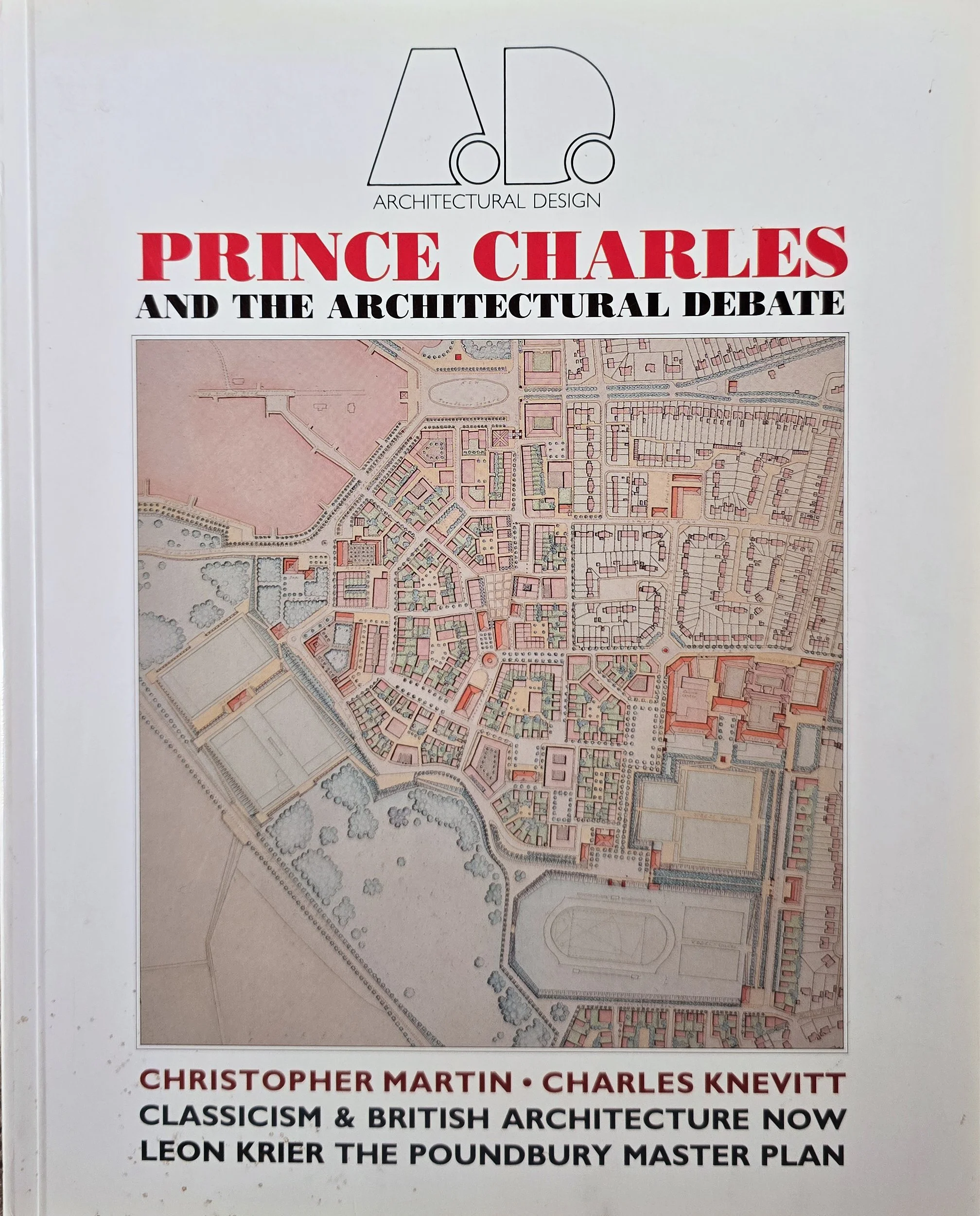
Through McCulloch’s archives, I am reminded that architecture shapes how we live and move, framing routines, interactions and a sense of belonging, often without conscious awareness. This issue of Architectural Design shows his engagement with debates shaping late twentieth‑century architecture.

Christopher Martin’s essay 'Second Chance' revisits the Prince of Wales’s 1987 Mansion House speech, his BBC film A Vision of Britain, and the 1989 V&A exhibition. McCulloch’s interest in these debates reflects his concern with human‑scale, context‑sensitive architecture. The Prince critiqued modernist redevelopment for erasing historic streets, squares and mixed‑use neighbourhoods, and argued for continuity, craft, and public engagement in design.

A bookmarked article, 'New Town Ordinances & Codes' by Duany, Plater‑Zyberk, and Chellman, likely noted by McCulloch because of links to another archived article by Duany, critiques regulations that prioritise traffic, parking, separated uses and low density. The Traditional Neighbourhood Ordinance they propose purports to reduce car dependence, and support social interaction, civic life, and a mix of housing and local commerce — principles McCulloch explored in his own work.

Richard Rogers’ 'Pulling Down the Prince' offers a counterpoint to A Vision of Britain, arguing that architecture reflects social, economic, and technological conditions. Traditions now revered were once radical. Rogers emphasises adaptability: buildings must change function while keeping coherence, a principle evident in McCulloch’s context‑sensitive design.

These perspectives intersect in McCulloch’s archives and practice. As Rogers notes, “once great centres of civic life have become jungles where the profiteer and the vehicle rule” (Architectural Design, 1989). McCulloch’s advocacy for walkable, mixed‑use communities and responsive design reveals an understanding of these issues that is practical and philosophical. This publication, as an artefact of his engagement, and in the context of 'Drawing Together', captures a moment in the ongoing conversation about continuity, adaptability, and civic life, showing why architecture, as McCulloch understood it, remains inseparable from the way we live.
What happens when we stop waiting for institutions to lead — and start building experiences together

For the past 25 years, I’ve worked across public galleries, community and artist-run spaces, and creative industries education, and I’ve facilitated numerous projects in spaces and places shaped by the voices of the people who use them.

Alongside this, my PhD research into DIY Museums immersed me in community-led initiatives where stories are told by the people who live them. These experiences showed me something powerful: when people are trusted with the tools, skills, and agency to create culture for themselves, the results are bold, relevant, and deeply connected.

That’s the opportunity we’re standing in front of right now.

The pace of change is faster than ever. Whether you’re a business, an educational provider, or a cultural organisation, meeting your audience where they are — in how they live, learn, connect, and consume culture — is no longer optional. Those who listen deeply, adapt quickly, and co-create meaning will not only survive, but thrive.

Imagine if every project, initiative, or experience began not with “what do we want to make?” but with “what matters most to the people we serve — and how can we build it together?” That’s when creativity becomes magnetic. That’s when people show up, participate, and share.

As I step into running my own creative business, this is the work I want to do: help organisations, businesses, and communities design experiences that feel participatory, relevant, and alive — spaces where the audience is not just watching but shaping what happens.

So here’s my question for you:

If you’ve worked in creative industries, education, or community culture — what’s one change you believe would make these experiences more relevant, inclusive, and alive right now?

I’d love to hear your thoughts — whether they’re big, structural shifts or small, practical actions you’ve seen make a real difference.