Posts tagged Drawing Together: John McCulloch's Community Architecture
Piopiotahi and the Architecture of Visitation

While travelling to Southland to work on 'Drawing Together: John McCulloch’s Community Architecture', I revisited Piopiotahi Milford Sound. I had never been there in summer; my previous visits were in wilder weather, when the landscape feels fierce and untamed. Still, it was easy to see the appeal of fine conditions for visitors to this World Heritage area.

John McCulloch worked on hundreds of projects across Southland, including tourism infrastructure in Te Anau and Piopiotahi. The Milford Sound Visitor Terminal is one of these. Driving the Milford Road, I imagined the regular site visits described by architect Brent Knight, who recalled the McCulloch team making fortnightly day trips for meetings. What a commute!

The scale of visitation was obvious. Traffic was heavy, and buses filled the terminal car park. Piopiotahi, named after the Piopio, an extinct native thrush, now attracts over a million visitors annually. Numbers grew from around 437,000 in 2012 to 883,000 in 2018. Most visitors take cruises from Freshwater Basin. Around 40–50% of international visitors to Queenstown travel on to Piopiotahi, as do 20% of domestic visitors, and 19% of international visitors to Southland. These figures, from the Milford Opportunities Project, show the pressures on the area and the need for planning.

Although widely known as 'Milford Sound,' Piopiotahi is actually a fiord — one of 14 in Aotearoa New Zealand, all in the South Island, formed by glacial movement carving deep coastal inlets.

Management of the area is evolving. Following six months of work, a new partnership has been established, facilitated and supported by the SDC. Previously shared between RealNZ (49%), Skeggs Group (49%), and the Council (2%), the structure now includes Kāi Tahu, through Ngāi Tahu Holdings, and eight Papatipu Rūnaka — as a 33.3% partner alongside RealNZ and Skeggs Group.

Experiencing the terminal amid such growth highlighted how environments change and how architecture must continually adapt. Projects like this are never permanent forms; they are catalysts. The terminal did more than provide shelter and ticketing — it enabled patterns of visitation, shaped how people arrive, gather, and depart, and organised the relationship between landscape, infrastructure, and experience. It became part of a larger trajectory no single moment of design could fully anticipate.

As visitor numbers rise, expectations shift, and leadership evolves, the architecture evolves too. Additions, reconfigurations, and new layers of meaning become part of its life. Rather than a finished product, the terminal is one stage in an ongoing process — a framework supporting environmental management, tourism, and identity building.

It is exciting to see Kāi Tahu taking a stronger role in kaitiakitanga in Piopiotahi, and to imagine how local narratives and cultural presence may become more embedded in the experience of this extraordinary place, shaping how it is visited and understood.

Drawing Together: John McCulloch and the Architecture of Civic Life

After returning from a week working in Southland, it has been a pleasure to spend time with publications from John McCulloch’s archives as part of research for the exhibition 'Drawing Together: John McCulloch’s Community Architecture.' I am certainly not an expert in architecture, but, like many, my relationship with it is personal. My mother, an interior designer with a passion for architecture, collected books that allowed me to explore space and design as a child. My parents’ second‑storey extension to our first family home in Dunedin included my mother’s lead‑lighting studio, where stacks of imported coloured glass and feature windows she made revealed the material and social possibilities of architecture.

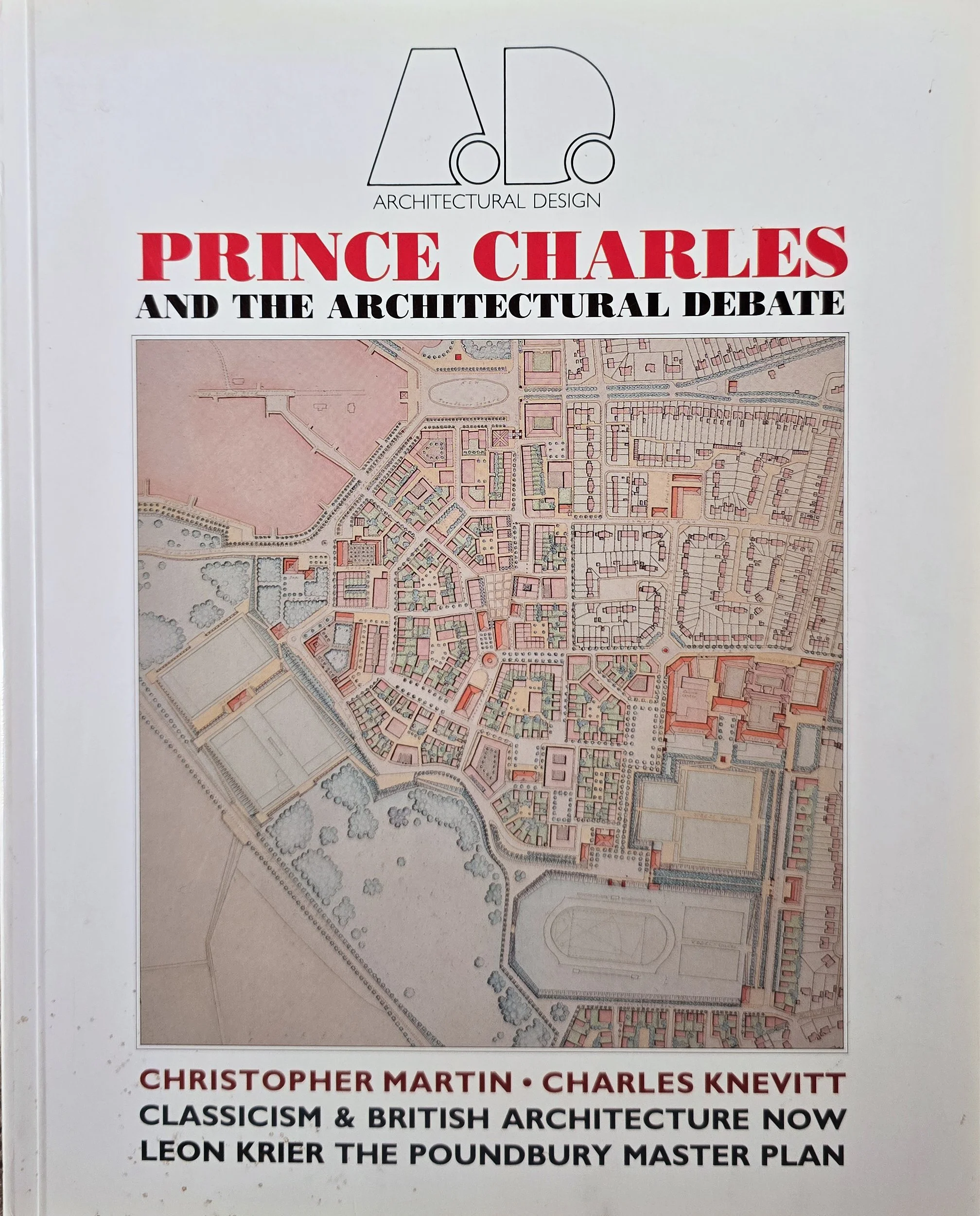
Through McCulloch’s archives, I am reminded that architecture shapes how we live and move, framing routines, interactions and a sense of belonging, often without conscious awareness. This issue of Architectural Design shows his engagement with debates shaping late twentieth‑century architecture.

Christopher Martin’s essay 'Second Chance' revisits the Prince of Wales’s 1987 Mansion House speech, his BBC film A Vision of Britain, and the 1989 V&A exhibition. McCulloch’s interest in these debates reflects his concern with human‑scale, context‑sensitive architecture. The Prince critiqued modernist redevelopment for erasing historic streets, squares and mixed‑use neighbourhoods, and argued for continuity, craft, and public engagement in design.

A bookmarked article, 'New Town Ordinances & Codes' by Duany, Plater‑Zyberk, and Chellman, likely noted by McCulloch because of links to another archived article by Duany, critiques regulations that prioritise traffic, parking, separated uses and low density. The Traditional Neighbourhood Ordinance they propose purports to reduce car dependence, and support social interaction, civic life, and a mix of housing and local commerce — principles McCulloch explored in his own work.

Richard Rogers’ 'Pulling Down the Prince' offers a counterpoint to A Vision of Britain, arguing that architecture reflects social, economic, and technological conditions. Traditions now revered were once radical. Rogers emphasises adaptability: buildings must change function while keeping coherence, a principle evident in McCulloch’s context‑sensitive design.

These perspectives intersect in McCulloch’s archives and practice. As Rogers notes, “once great centres of civic life have become jungles where the profiteer and the vehicle rule” (Architectural Design, 1989). McCulloch’s advocacy for walkable, mixed‑use communities and responsive design reveals an understanding of these issues that is practical and philosophical. This publication, as an artefact of his engagement, and in the context of 'Drawing Together', captures a moment in the ongoing conversation about continuity, adaptability, and civic life, showing why architecture, as McCulloch understood it, remains inseparable from the way we live.

An Experiential Order of Things

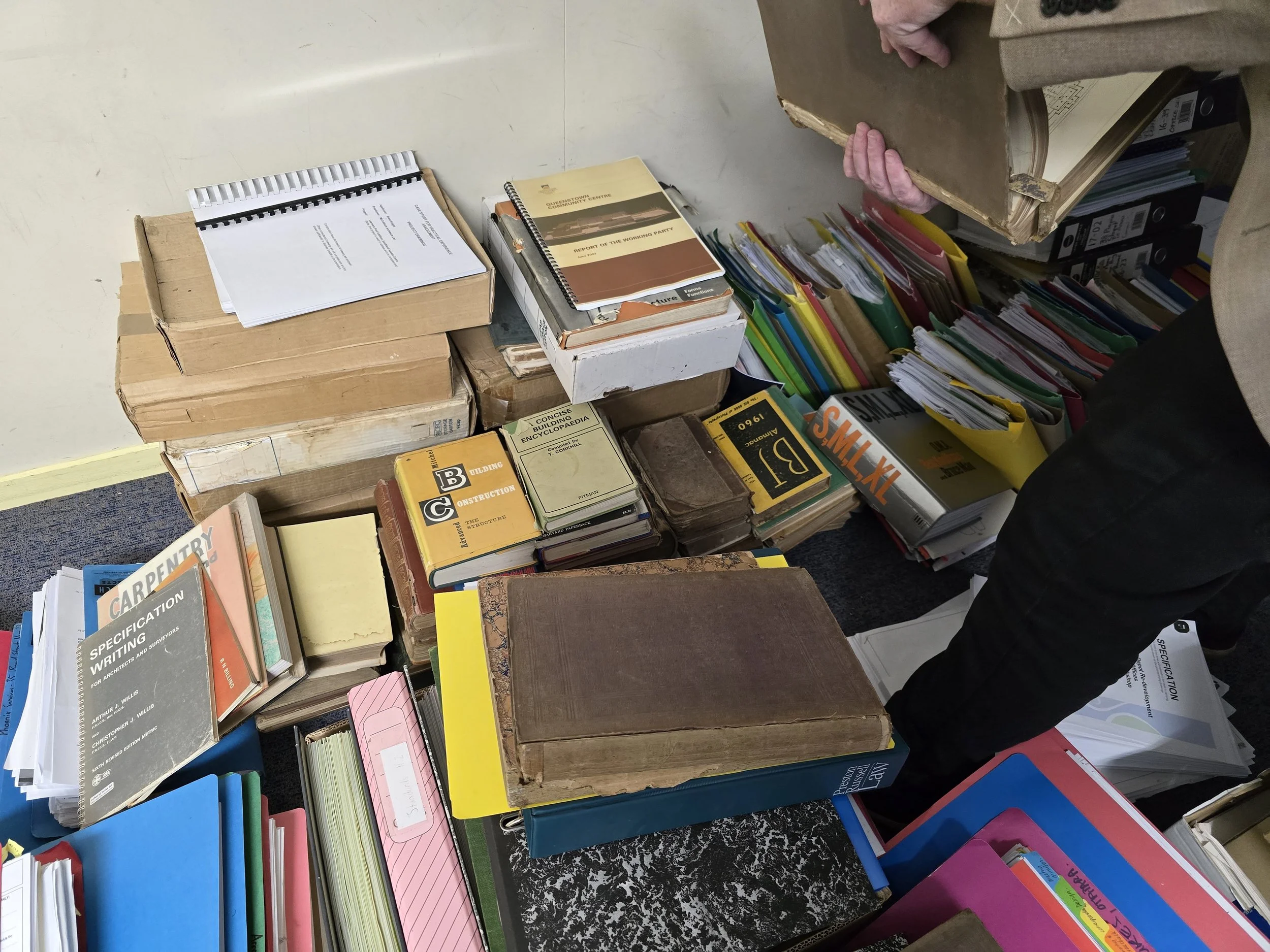
John McCulloch compiled folders of archives that resonate deeply with me—reminders of a time when we routinely photocopied inspirational images, book chapters, and cut-out newspaper or magazine articles, keeping them as significant reference points to return to.

Scattered among these were records of our own practice: photographs, notes, sketches, and writing. I still have my own versions of these folders stored in my garage. McCulloch kept his in his office, alongside an extensive collection of artefacts accumulated over a lifetime of architectural interrogation.

Of course, this method of collecting and storing information has now largely disappeared, replaced by digital archives. Yet there is something captivating about physical archives assembled in this way. They allow us to see an experiential order of things: a tactile timeline of thinking, a collage of influences, and an unfolding relationship to what was happening locally, nationally, and globally.

This physical process of archiving underpins the exhibition. In my last post, I reflected on McCulloch’s focus on pedestrians and the importance of designing town centres that reflect community life. His 1975 thesis lamented the growing encroachment of cars into pedestrian spaces and argued for places where people, rather than vehicles, are drawn together.

Following this thread, a 1989 article titled “Traditional Towns” by Andrés Duany, a photocopy McCulloch kept in his files, describes “a depressing and aggressive analysis of what’s happening in the suburbs.” Duany references Virginia Beach — a landscape dominated by large buildings, retail complexes, car parks, and multi-lane roads. Everything, he purports, is designed for the convenience of cars, moving and parking them, at the expense of pedestrian and therefore social life.

For Duany, commuting by car is no longer a choice but a system reinforced by planning codes that block walkable, mixed-use towns. The result is suburbs with no real public realm, little street life, and no safe reason to walk. These conditions erode social cohesion, “stripping life from our streets.”

Seen through McCulloch’s eyes, the article’s relevance is clear. His work in New Zealand during the 1970s and 1980s faced similar challenges as town centres shifted toward car-dominant planning. By filing Duany’s critique alongside his drawings and notes, McCulloch documented both his process and the wider conversations shaping it.

As I revisit these archives today, I'm prompted to ask: What lessons can we reclaim from critiques of car-dominated planning? How do we re-centre people in our towns and cities? What role do designers, planners, and communities play in shaping environments that support connection, safety, and social life?

These provocations sit at the heart of McCulloch's practice, encouraging us to consider not just how we archive ideas—but how we act on them.

Duany, Andrés. (1989). “Traditional Towns.” Architectural Design, 59 (9/10), pp. 60–64.

Are Pedestrians Still Loved? Revisiting John McCulloch’s Vision for Invercargill

As I continue delving into the archives for the exhibition 'Drawing Together: John McCulloch’s Community Architecture', I’m struck by how clearly McCulloch understood something we still struggle with today: towns and cities should first and foremost work for the people who walk through and around them.

In his 1975 University of Auckland thesis, 'Invercargill: A Study of the Town Centre', McCulloch placed pedestrians at the centre of his thinking. He argued that the heart of a town or city is defined not by cars or buildings, but by the everyday activities and experiences of the people moving within it.

His thesis focused on revitalising Invercargill’s town centre—creating a sense of identity, a true ‘arrival’ point, and a civic heart shaped around pedestrian activity. Shelter from the weather, clear walkable routes, green space, trees, places to sit, places to gather—simple, human-centred elements that make a town or city feel alive.

Re-reading his work makes me reflect on my own daily experience as a committed pedestrian. I navigate cars reversing out of low-visibility driveways, unlit paths, damaged pavements, broken glass, scooters, and spaces that feel increasingly designed for vehicles first. The sense of abandonment in some pedestrian and cycleway areas stands in stark contrast to the vibrancy McCulloch envisaged.

One passage he quoted in his thesis, taken from Ilf and Petrov’s satirical novel 'The Golden Calf', feels surprisingly contemporary in its lament of car dominance over pedestrian space:

“The streets built by the pedestrians passed into the hands of the motorists. The roads were doubled in width and the pavements were narrowed down to the size of a tobacco wrapper. In a large city, pedestrians lead the life of martyrs, just as though they were in a traffic-run ghetto. They are allowed to cross the street only at crossings – at points where the traffic is heaviest and where the thread by which a pedestrian’s life usually hangs may most easily snap.”

Written nearly a century ago, it still reads like a critique of many modern towns and cities.

McCulloch believed Invercargill—and all towns and cities—should offer a welcoming, human-scaled centre: a place where walking feels safe, accessible, intentional, and valued. His early advocacy for pedestrian-first design now feels less like historical research and more like an urgent reminder.

The exhibition research keeps me returning to this question:

What would our towns and cities look like if we loved pedestrians again?

Ilf, I., & Petrov, E. (1964). The Golden Calf (J. H. C. Richardson, Trans.). Frederick Muller. (Original work published 1931).