Posts tagged Storytelling
Piopiotahi and the Architecture of Visitation

While travelling to Southland to work on 'Drawing Together: John McCulloch’s Community Architecture', I revisited Piopiotahi Milford Sound. I had never been there in summer; my previous visits were in wilder weather, when the landscape feels fierce and untamed. Still, it was easy to see the appeal of fine conditions for visitors to this World Heritage area.

John McCulloch worked on hundreds of projects across Southland, including tourism infrastructure in Te Anau and Piopiotahi. The Milford Sound Visitor Terminal is one of these. Driving the Milford Road, I imagined the regular site visits described by architect Brent Knight, who recalled the McCulloch team making fortnightly day trips for meetings. What a commute!

The scale of visitation was obvious. Traffic was heavy, and buses filled the terminal car park. Piopiotahi, named after the Piopio, an extinct native thrush, now attracts over a million visitors annually. Numbers grew from around 437,000 in 2012 to 883,000 in 2018. Most visitors take cruises from Freshwater Basin. Around 40–50% of international visitors to Queenstown travel on to Piopiotahi, as do 20% of domestic visitors, and 19% of international visitors to Southland. These figures, from the Milford Opportunities Project, show the pressures on the area and the need for planning.

Although widely known as 'Milford Sound,' Piopiotahi is actually a fiord — one of 14 in Aotearoa New Zealand, all in the South Island, formed by glacial movement carving deep coastal inlets.

Management of the area is evolving. Following six months of work, a new partnership has been established, facilitated and supported by the SDC. Previously shared between RealNZ (49%), Skeggs Group (49%), and the Council (2%), the structure now includes Kāi Tahu, through Ngāi Tahu Holdings, and eight Papatipu Rūnaka — as a 33.3% partner alongside RealNZ and Skeggs Group.

Experiencing the terminal amid such growth highlighted how environments change and how architecture must continually adapt. Projects like this are never permanent forms; they are catalysts. The terminal did more than provide shelter and ticketing — it enabled patterns of visitation, shaped how people arrive, gather, and depart, and organised the relationship between landscape, infrastructure, and experience. It became part of a larger trajectory no single moment of design could fully anticipate.

As visitor numbers rise, expectations shift, and leadership evolves, the architecture evolves too. Additions, reconfigurations, and new layers of meaning become part of its life. Rather than a finished product, the terminal is one stage in an ongoing process — a framework supporting environmental management, tourism, and identity building.

It is exciting to see Kāi Tahu taking a stronger role in kaitiakitanga in Piopiotahi, and to imagine how local narratives and cultural presence may become more embedded in the experience of this extraordinary place, shaping how it is visited and understood.

Drawing Together: John McCulloch and the Architecture of Civic Life

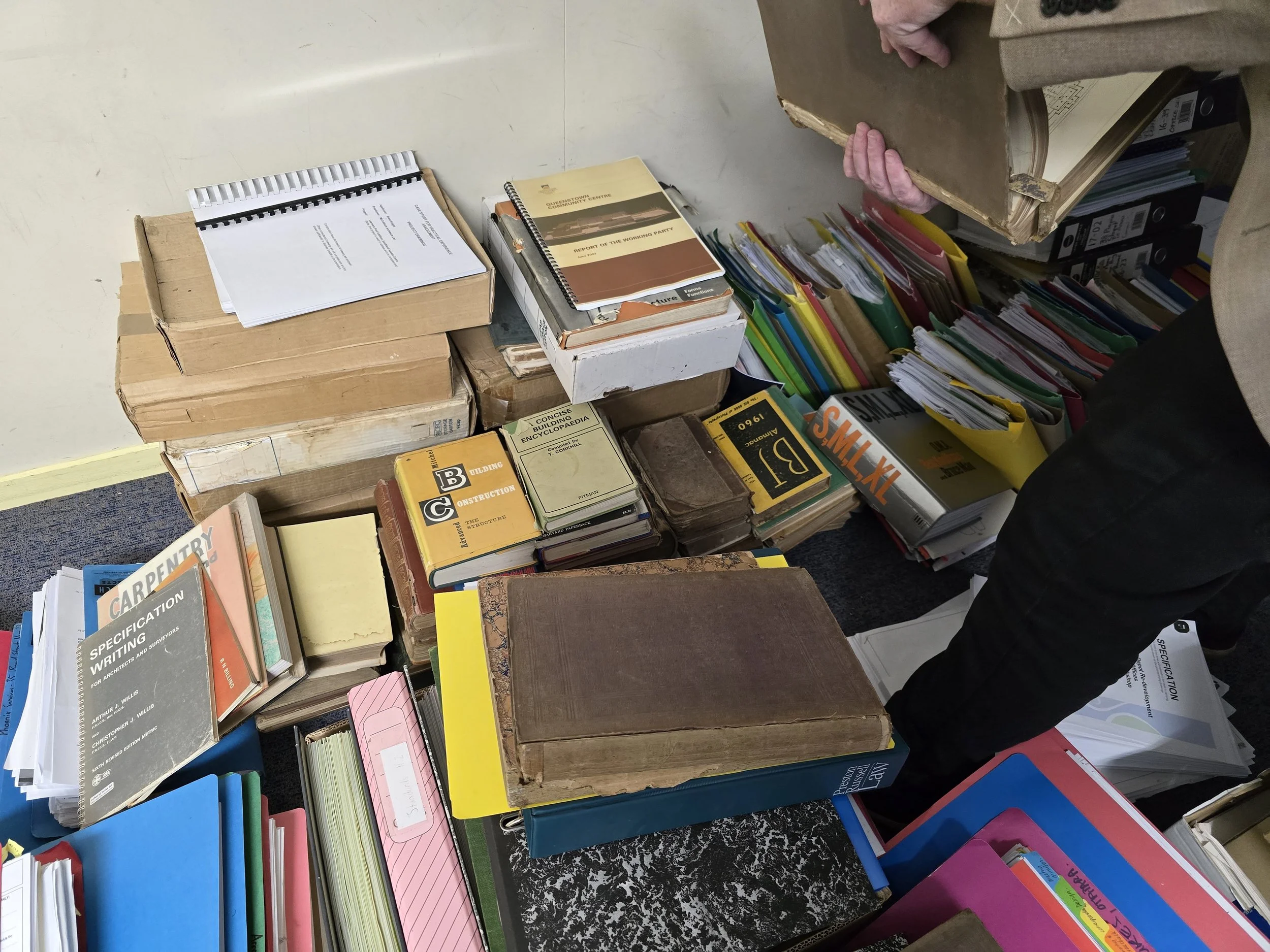
After returning from a week working in Southland, it has been a pleasure to spend time with publications from John McCulloch’s archives as part of research for the exhibition 'Drawing Together: John McCulloch’s Community Architecture.' I am certainly not an expert in architecture, but, like many, my relationship with it is personal. My mother, an interior designer with a passion for architecture, collected books that allowed me to explore space and design as a child. My parents’ second‑storey extension to our first family home in Dunedin included my mother’s lead‑lighting studio, where stacks of imported coloured glass and feature windows she made revealed the material and social possibilities of architecture.

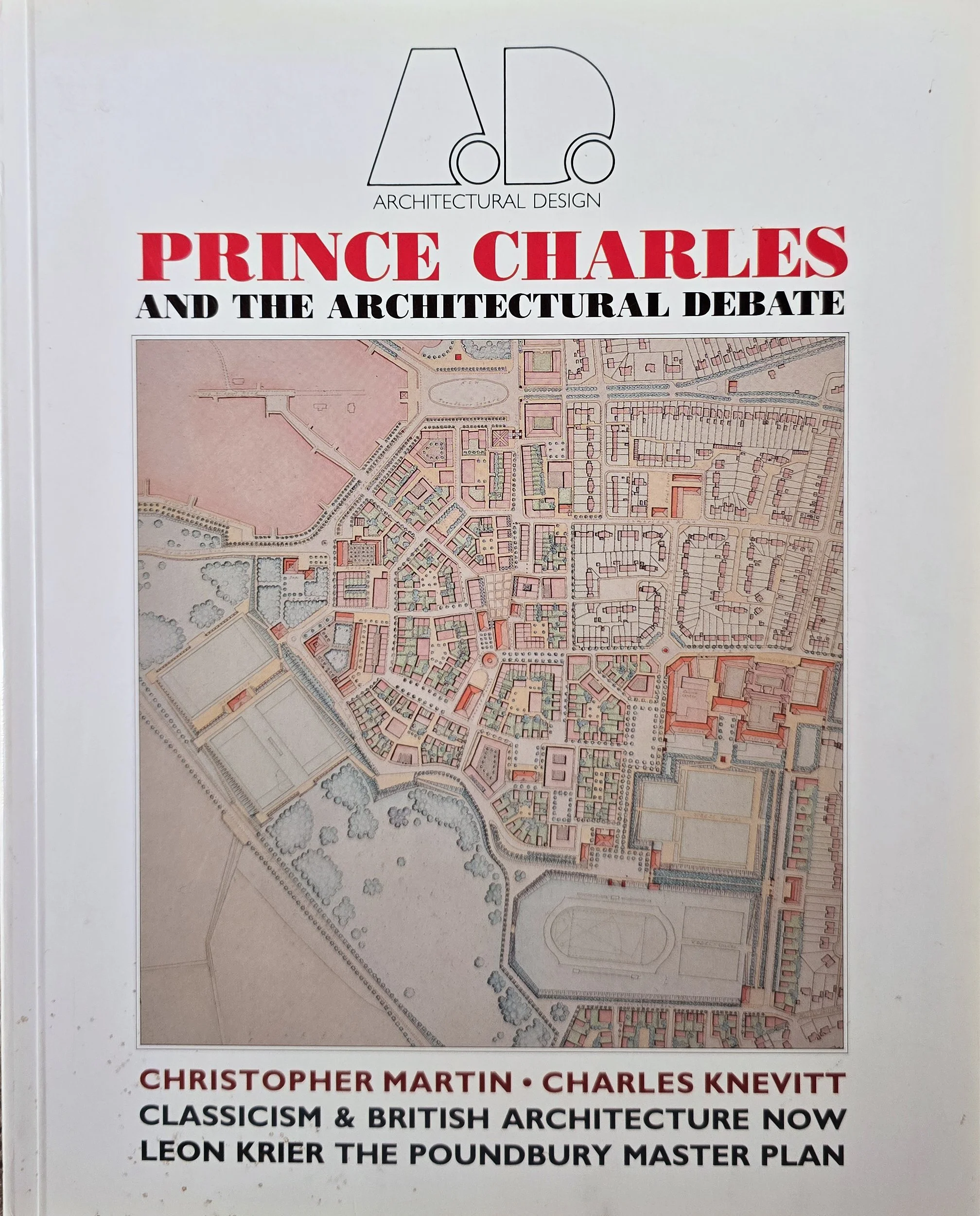
Through McCulloch’s archives, I am reminded that architecture shapes how we live and move, framing routines, interactions and a sense of belonging, often without conscious awareness. This issue of Architectural Design shows his engagement with debates shaping late twentieth‑century architecture.

Christopher Martin’s essay 'Second Chance' revisits the Prince of Wales’s 1987 Mansion House speech, his BBC film A Vision of Britain, and the 1989 V&A exhibition. McCulloch’s interest in these debates reflects his concern with human‑scale, context‑sensitive architecture. The Prince critiqued modernist redevelopment for erasing historic streets, squares and mixed‑use neighbourhoods, and argued for continuity, craft, and public engagement in design.

A bookmarked article, 'New Town Ordinances & Codes' by Duany, Plater‑Zyberk, and Chellman, likely noted by McCulloch because of links to another archived article by Duany, critiques regulations that prioritise traffic, parking, separated uses and low density. The Traditional Neighbourhood Ordinance they propose purports to reduce car dependence, and support social interaction, civic life, and a mix of housing and local commerce — principles McCulloch explored in his own work.

Richard Rogers’ 'Pulling Down the Prince' offers a counterpoint to A Vision of Britain, arguing that architecture reflects social, economic, and technological conditions. Traditions now revered were once radical. Rogers emphasises adaptability: buildings must change function while keeping coherence, a principle evident in McCulloch’s context‑sensitive design.

These perspectives intersect in McCulloch’s archives and practice. As Rogers notes, “once great centres of civic life have become jungles where the profiteer and the vehicle rule” (Architectural Design, 1989). McCulloch’s advocacy for walkable, mixed‑use communities and responsive design reveals an understanding of these issues that is practical and philosophical. This publication, as an artefact of his engagement, and in the context of 'Drawing Together', captures a moment in the ongoing conversation about continuity, adaptability, and civic life, showing why architecture, as McCulloch understood it, remains inseparable from the way we live.

Abandoned Works

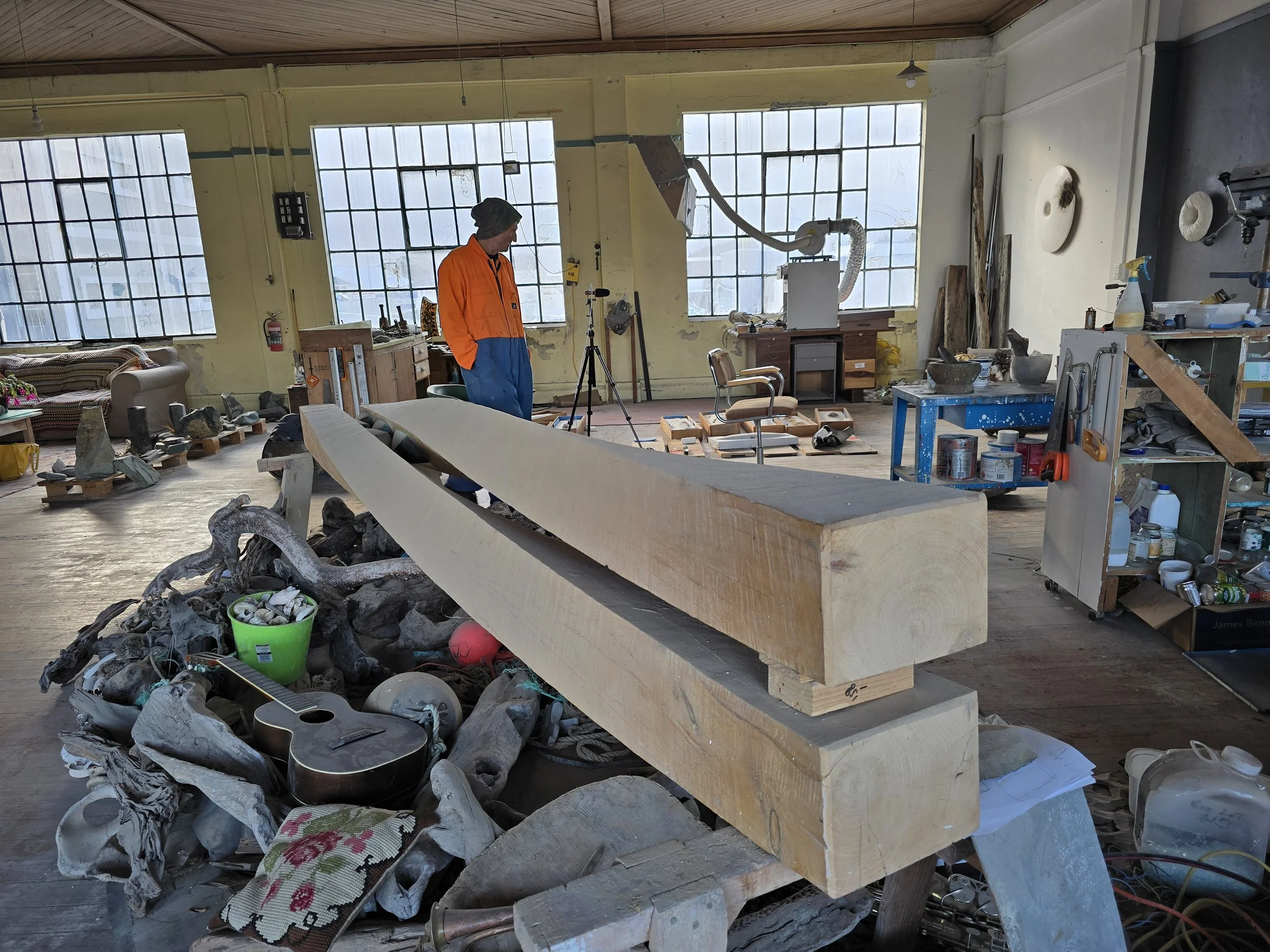
Fractured sunlight streams through the studio windows illuminating these abandoned things. Years of foraging overlooked remnants of past lives, industry once productive and valued. Smoothed, encrusted and transformed by the tide before being cast ashore, these collected abandoned things rest for a time, waiting to be newly reconfigured by the elements of the studio.

Sorted, piled, juxtaposed and integrated, these abandoned things are brought back into consciousness and questioning. A forgotten industry swallowed by the sea – an abandoned ‘Works’ at Ocean Beach in Bluff. “The Beach” both site and archive: a fossil of environmental intervention, a local economic ‘backbone’, traces of a century of labour and culture.

John Wishart gathers these hybrid artefacts and uses them not only as found objects but as points of departure. He creates new sculptural forms inspired by their ambiguities—objects that hover between the recognisable and the unfamiliar, the organic and the engineered. We are invited to ask: Is this naturally formed or man-made? This ongoing tension is central to the work, for it mirrors the very uncertainty produced by the sea’s intervention. By blurring categories of origin, the sculptures complicate our assumptions about material histories, authorship, and the boundaries between industry and ecology.

Abandoned Works speaks not only to the derelict freezing works but also to the idea that these objects—and Wishart’s sculptures inspired by them—exist in a state of becoming. Like archaeological fragments, or museum artefacts excavated from uncertain contexts, they appear suspended in time: neither fully of the past nor the present, neither wholly finished nor truly discarded. Weathering, erosion, and accretion become forms of authorship. The sea continues the work that industry began, and the artist, in turn, extends this chain of transformation. Each sculpture captures a moment within an endless cycle of making, unmaking, and remaking.

Abandoned Works preserves traces of an industry that once underpinned the local community, sustaining labour, culture, and livelihoods, yet whose significance was swiftly lost to time. These objects testify to the fragility of value, both material and social, and the ways in which human endeavour is shaped—and sometimes undone—by forces beyond our control.

In the studio, Wishart’s sculptures extend this dialogue: they are never finished, only abandoned, entering a state of suspension between making and letting go. Each piece captures a moment within an endless cycle reminding us that artworks, like communities and landscapes, are provisional, open to change, and inseparably entwined with the passage of time.

What does it mean to paint in the landscape?

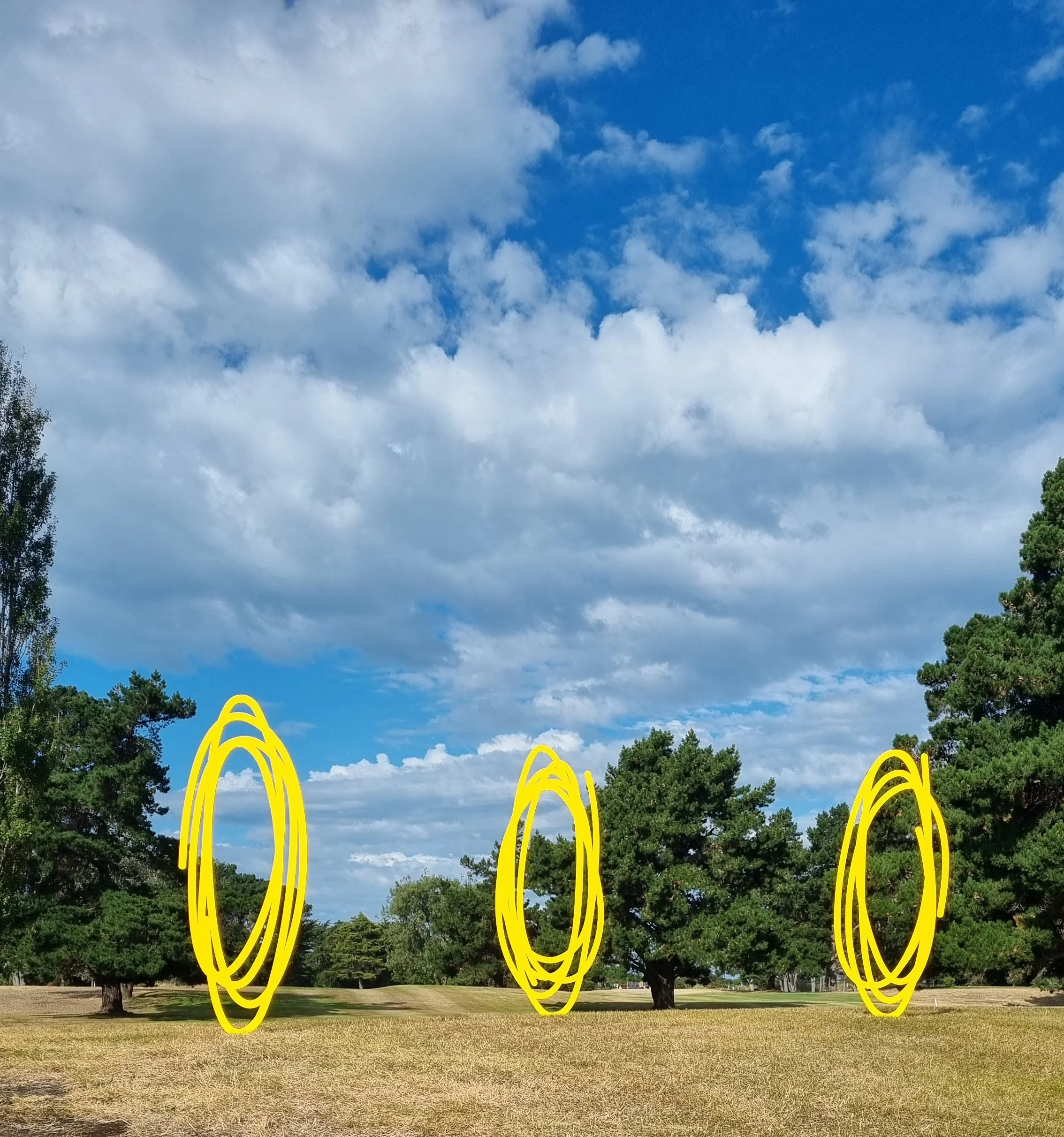
What does it mean to paint in the landscape? To create portals that appear digitally superimposed, unnatural, disconnected, yet undeniably present. Like stumbling across a painting you have somehow miraculously stepped inside when you were convinced it was simply a photograph. A process you have entered and become a part of. Witness to the dynamism of scribbled loops rendered digitally into monumental, bold yellow environmental, almost architectural intrusions.

Nathan Ingram’s Superimposition Loops translate small, hand-drawn gestural marks into monumental forms, expanding the immediacy of painting into sculptural intervention. Each scribbled, extended loop carries the energy of a drawn line, amplified. They evoke moments reminiscent of Who Framed Roger Rabbit (1988), where cartoons exist against the backdrop of filmic reality—like Eddie Valiant approaching a dark tunnel, uncertain of what awaits in Toon Town.

By projecting these painterly gestures into landscape, the sculptures create thresholds and frames through which the landscape becomes changed both physically and perceptually. They are points of pause, of reflection, and of reorientation within the environment. Each form resonates with a tension: it is both familiar and uncanny, abstract yet suggestive of habitation. In their presence, the act of painting becomes immersive, a record of gesture and precision, movement and stasis, simultaneously frozen and in flux.

These interventions ask us to reconsider our relationship to place, materiality, and creative process. The landscape becomes a canvas, yet one that is inhabited, navigated, and experienced. In translating painted gestures into environmental forms, the work underscores painting as a generative practice of experiential possibilities extending beyond the two-dimensionality of the wall. Each loop is a testament to the tension between creation and encounter, mark and monument, suggesting that painting is never fully confined—it spills outward, reshaping the world it touches.

By projecting these painterly gestures into the landscape, Ingram’s Superimposition Loops conjure thresholds where the ordinary dissolves into the extraordinary. Like stepping into a scene where the familiar terrain suddenly feels animated, uncanny, and alive—a place where imagination and reality collide.

Each monumental, scribbled loop retains the energy of a hand-drawn mark, amplified into bold, architectural presence, yet retaining the freedom and immediacy of its gestural origin. Even the most seemingly natural environment is revealed as layered and enchanted like a set where human mark-making in the landscape is rendered visible.

An Experiential Order of Things

John McCulloch compiled folders of archives that resonate deeply with me—reminders of a time when we routinely photocopied inspirational images, book chapters, and cut-out newspaper or magazine articles, keeping them as significant reference points to return to.

Scattered among these were records of our own practice: photographs, notes, sketches, and writing. I still have my own versions of these folders stored in my garage. McCulloch kept his in his office, alongside an extensive collection of artefacts accumulated over a lifetime of architectural interrogation.

Of course, this method of collecting and storing information has now largely disappeared, replaced by digital archives. Yet there is something captivating about physical archives assembled in this way. They allow us to see an experiential order of things: a tactile timeline of thinking, a collage of influences, and an unfolding relationship to what was happening locally, nationally, and globally.

This physical process of archiving underpins the exhibition. In my last post, I reflected on McCulloch’s focus on pedestrians and the importance of designing town centres that reflect community life. His 1975 thesis lamented the growing encroachment of cars into pedestrian spaces and argued for places where people, rather than vehicles, are drawn together.

Following this thread, a 1989 article titled “Traditional Towns” by Andrés Duany, a photocopy McCulloch kept in his files, describes “a depressing and aggressive analysis of what’s happening in the suburbs.” Duany references Virginia Beach — a landscape dominated by large buildings, retail complexes, car parks, and multi-lane roads. Everything, he purports, is designed for the convenience of cars, moving and parking them, at the expense of pedestrian and therefore social life.

For Duany, commuting by car is no longer a choice but a system reinforced by planning codes that block walkable, mixed-use towns. The result is suburbs with no real public realm, little street life, and no safe reason to walk. These conditions erode social cohesion, “stripping life from our streets.”

Seen through McCulloch’s eyes, the article’s relevance is clear. His work in New Zealand during the 1970s and 1980s faced similar challenges as town centres shifted toward car-dominant planning. By filing Duany’s critique alongside his drawings and notes, McCulloch documented both his process and the wider conversations shaping it.

As I revisit these archives today, I'm prompted to ask: What lessons can we reclaim from critiques of car-dominated planning? How do we re-centre people in our towns and cities? What role do designers, planners, and communities play in shaping environments that support connection, safety, and social life?

These provocations sit at the heart of McCulloch's practice, encouraging us to consider not just how we archive ideas—but how we act on them.

Duany, Andrés. (1989). “Traditional Towns.” Architectural Design, 59 (9/10), pp. 60–64.

Are Pedestrians Still Loved? Revisiting John McCulloch’s Vision for Invercargill

As I continue delving into the archives for the exhibition 'Drawing Together: John McCulloch’s Community Architecture', I’m struck by how clearly McCulloch understood something we still struggle with today: towns and cities should first and foremost work for the people who walk through and around them.

In his 1975 University of Auckland thesis, 'Invercargill: A Study of the Town Centre', McCulloch placed pedestrians at the centre of his thinking. He argued that the heart of a town or city is defined not by cars or buildings, but by the everyday activities and experiences of the people moving within it.

His thesis focused on revitalising Invercargill’s town centre—creating a sense of identity, a true ‘arrival’ point, and a civic heart shaped around pedestrian activity. Shelter from the weather, clear walkable routes, green space, trees, places to sit, places to gather—simple, human-centred elements that make a town or city feel alive.

Re-reading his work makes me reflect on my own daily experience as a committed pedestrian. I navigate cars reversing out of low-visibility driveways, unlit paths, damaged pavements, broken glass, scooters, and spaces that feel increasingly designed for vehicles first. The sense of abandonment in some pedestrian and cycleway areas stands in stark contrast to the vibrancy McCulloch envisaged.

One passage he quoted in his thesis, taken from Ilf and Petrov’s satirical novel 'The Golden Calf', feels surprisingly contemporary in its lament of car dominance over pedestrian space:

“The streets built by the pedestrians passed into the hands of the motorists. The roads were doubled in width and the pavements were narrowed down to the size of a tobacco wrapper. In a large city, pedestrians lead the life of martyrs, just as though they were in a traffic-run ghetto. They are allowed to cross the street only at crossings – at points where the traffic is heaviest and where the thread by which a pedestrian’s life usually hangs may most easily snap.”

Written nearly a century ago, it still reads like a critique of many modern towns and cities.

McCulloch believed Invercargill—and all towns and cities—should offer a welcoming, human-scaled centre: a place where walking feels safe, accessible, intentional, and valued. His early advocacy for pedestrian-first design now feels less like historical research and more like an urgent reminder.

The exhibition research keeps me returning to this question:

What would our towns and cities look like if we loved pedestrians again?

Ilf, I., & Petrov, E. (1964). The Golden Calf (J. H. C. Richardson, Trans.). Frederick Muller. (Original work published 1931).

Communities, in every shape and context, carry stories that often go untold.

My passion is helping bring those stories to life — not just as displays, but as experiences that connect people and create pride in who they are and what they do.

At the heart of this work is the process of creating something with the community. That process is what matters most, and it’s the story that deserves to be shared. The exhibition or final outcome is simply the artifact of that journey.

Whether it’s an exhibition, concert, performance, or workshop, the most powerful projects happen when communities are involved from start to finish. This makes the creative journey part of the story itself — one worth telling and celebrating.

For me, an exhibition isn’t just something to look at; it’s a place where ideas meet, conversations spark, and shared experiences leave a lasting impact.

Earlier this year, I visited Invercargill to connect with people and explore how I could support art, design, and storytelling in diverse communities. I’ve just returned from a second trip, so it feels like the right moment to reflect on my deep connections to Southland.

I spent ten years at the Southern Institute of Technology, managing creative industries programmes in an environment that truly supported research and growth.

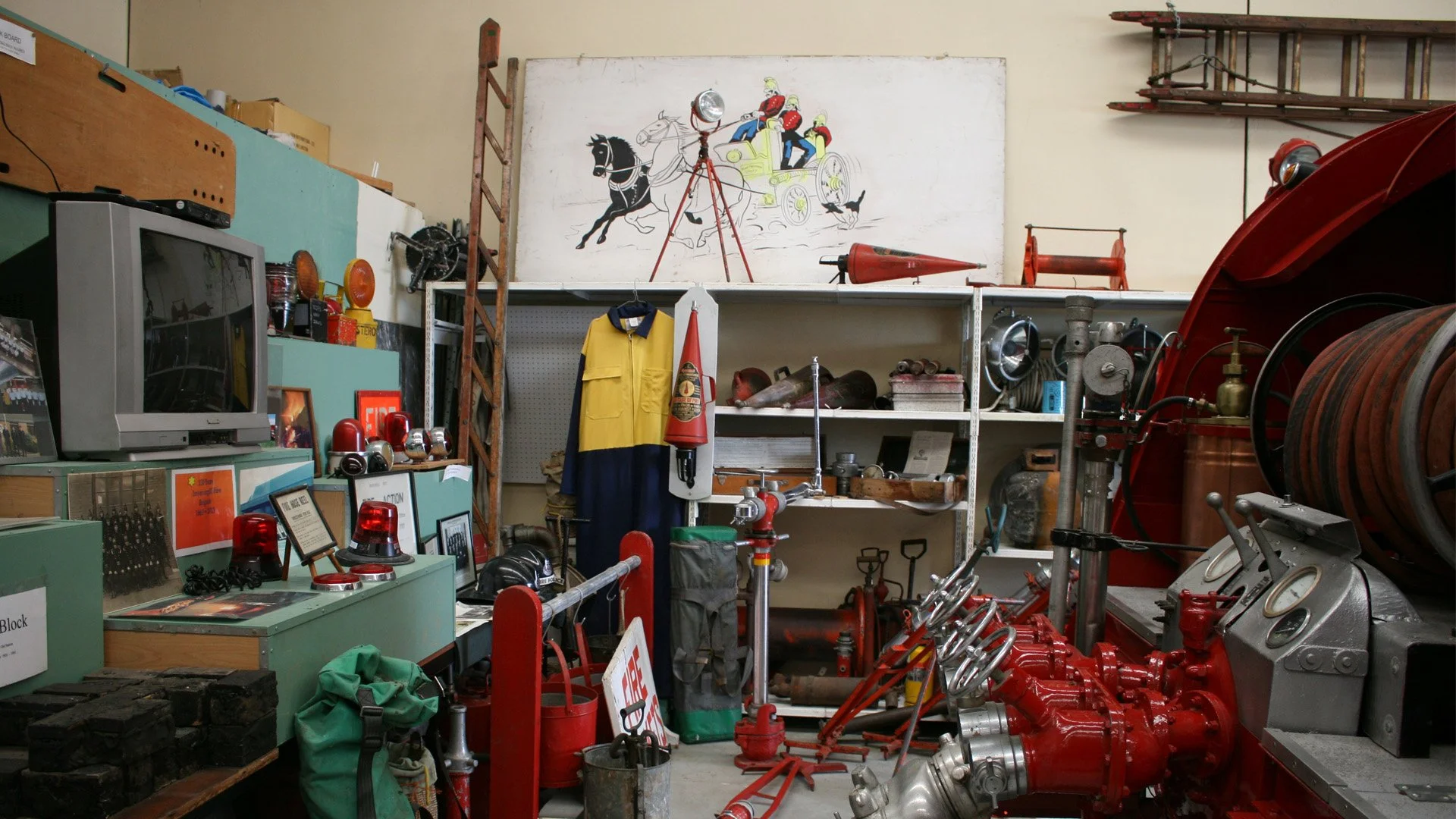
While there, I completed my PhD on DIY museums — small, mostly volunteer-run museums where communities tell their own stories in their own unique ways.

The projects I created as part of my PhD — including exhibitions, workshops, concerts, and talks in a variety of venues — were practical applications of the approaches I observed and engaged with in Southland’s community-led cultural spaces.

These projects focused on bringing spaces to life and creating shared experiences, turning ideas into meaningful, real-world moments.

I carry forward a key lesson: when communities take the lead, the results can be powerful and transformative.

Is your region’s arts, culture, and heritage brand a secret?

Across Aotearoa New Zealand, I see incredible destinations—museums, galleries, historic sites, cultural spaces—that are often overlooked when together they could be powerful, unified, and unforgettable.

Now imagine this:

Visitors start engaging with your arts, culture, and heritage brand before they even arrive, discovering and planning experiences through a cohesive online platform.

They’re welcomed at the airport with your region’s identity on display.

Over breakfast in a hotel or café, stories connect them to your place.

And it flows through their journey—alive in streets, public spaces, businesses, and cultural and heritage venues your community proudly shares.

Arts, culture, and heritage shouldn’t be stumbled upon by chance. They should be embedded in daily life, part of your region’s identity, and told as a cohesive and compelling story.

Imagine your museums, galleries, archives, heritage sites, trails, creative spaces, and businesses working together, creating a living brand experience your community can celebrate—and visitors can’t ignore.

When arts, culture, and heritage are central to a region’s brand, they don’t just enrich community life—they attract people, investment, and pride of place. The secret is already there. The question is: will you keep it hidden, or will you unify it into the story your region tells the world?

Let’s work together to make your region’s arts, culture, and heritage impossible to miss—contact me to start the conversation.

Why aren’t our community’s museums working together?

This question has haunted me for years. The benefits of collaboration for communities are so clear—yet, too often, we see competitiveness, turf wars, or even sabotage. I’ve witnessed the desire to be the ‘top dog’ overshadow the real purpose of museum work.

Private museums are dismissed as not ‘real’ museums. Community-led museums are branded ‘unprofessional.’ Meanwhile, larger institutions sometimes posture as rescuers—armed with HVAC systems, neat labels, and cavernous storage facilities that consume vast budgets. But how much of those collections will communities ever actually see? Too often, less than 10%.

By contrast, many volunteer-led museums proudly display the majority of their collections—an approach some call ‘amateur.’ But what if this visibility is, in fact, a strength? What if museums stopped competing and started collaborating—recognising that communities thrive when their heritage is represented through many voices, many perspectives, and many approaches?

We must also question what ‘professionalism’ really means. Large storage facilities are not, on their own, a sign of success. Preservation matters, yes—but preservation should not mean hiding every artifact in perpetuity. True preservation is about keeping our stories alive. Objects and archives are catalysts for connection, not trophies to be locked away.

When the sector equates professionalism with hoarding unseen treasures, we risk losing sight of our purpose. Museums are not just guardians of things; they are platforms for people. They are funded by communities to project our voices, to bring us together, to help us see ourselves in new ways, and to challenge and excite us.

Imagine if, instead of competing for status, museums of every scale worked collectively to serve their communities. Imagine if resources were shared, expertise exchanged, and stories co-created. The result would be richer, more diverse, and more relevant than any single institution could achieve alone.

The question, then, is not why aren’t museums working together—but isn’t it time we reimagined museums as collaborators, not competitors?

What if museums have no walls?

It’s not a new question, but it continues to inspire us to imagine what museums could be. Too often, we see them as buildings first and experiences second. In Aotearoa New Zealand, a museum is defined by purpose, not walls or storage.

Museums connect people, communities, and stories. In many ways, we are all curators, holding collections in our homes, memories, and hearts. Objects alone are quiet; it’s the stories they carry that bring them to life.

Imagine museums as flexible as the communities they serve—able to move, grow, evolve, and appear in unexpected places, shaped by local voices.

Preserving an object is never just about the object itself, but about the connections it sustains. Buildings matter too—they can carry stories of architecture, resilience, generosity, and vision—but the true magic lies in the spaces they enable, alive with people, community, and storytelling.

A museum could be a historic house, a warehouse, a park, a digital space, or even a single treasured story passed from one person to another. Purpose is not defined by form, but by the connections it creates, the stories it preserves and projects, and the meaning it brings to its community.

Perhaps the question isn’t what if museums have no walls, but rather: what if museums connect, preserve, and project the stories of their communities in partnership with the people who live them?

Imagine a museum shaped by your community—how could it bring local stories to life?

A Network of Museums: Diverse Experiences, One Shared Brand

Museums are more than buildings. They are art galleries, cultural centres, marae, historic sites, science centres, open-air museums, botanical gardens, aquaria, and countless other spaces where communities share culture, stories, and local identity.

Centralised, private, and volunteer-driven museums in New Zealand often operate in silos. The future lies in working together to create a connected network that benefits everyone.

Collaboration unlocks new possibilities:

• Coordinated programming that links exhibitions, workshops, and events across multiple sites.

• Shared communications and promotion under a cohesive brand that positions the network as a unified, engaging destination.

• Connector roles — communications, content, and engagement specialists — who are not attached to a single museum but ensure knowledge, resources, and audiences move freely across the network.

• Bookable ‘museum journeys’ that enable visitors to move seamlessly between sites, experiencing the full diversity of local culture, stories, and creativity.

This approach is already proven to work. The Discovery Trail in Ithaca, New York, brings local cultural institutions together to deliver coordinated programming, shared promotion, and a bookable, connected visitor experience. Visitors move seamlessly between sites, discovering local stories as a unified journey — demonstrating how collaboration can unlock a network’s full potential.

To achieve this locally, networks could:

• Develop a shared brand identity that clearly signals the connected experience.

• Consider connector roles to manage programming, promotion, and engagement across museums.

• Encourage co-created exhibitions and events, where local communities, micro/small museums, and centralised institutions collaborate on content.

• Promote bookable museum trails that give residents and visitors a curated journey across the network.

When different forms of expertise and passion intersect, museums become living networks, reflecting the people, places, and stories of the community.

Culture, creativity, and local identity thrive when they are shared, co-created, and celebrated by everyone. Collaboration is not optional, it is the key to a vibrant, sustainable, and networked museum experience.
What is a museum?

In New Zealand, the answer is as diverse as the people themselves.

An art gallery, a cultural centre, a marae.

Historic places and heritage sites.

Science centres and open-air museums.

Botanical gardens, aquariums, zoos.

All of them keepers of memory,

all of them guardians of stories.

But a museum is never only a building.

It is alive.

It moves between us, with us, through us.

A museum is a city,

and a city is a museum.

A museum is a community,

and a community is a museum.

These are not static things—

they shift, they change, they breathe.

They are dynamic, contested,

always becoming something new.

A museum might surface in a shop assistant’s story,

in a conversation at a local bar or cafe,

in a letter to the editor,

or in the quiet work of committees and boards.

Every exchange, every decision, every word spoken

adds to the fabric of what a museum is.

On the city’s stage,

there are no lines drawn between audience and actor.

We are all performers here.

Museum workers, visitors, neighbours, friends—

together shaping the content,

the direction,

the representation of our shared stories.

So, what is a museum?

It is not a place we enter and leave behind.

It is a living performance,

a constant exchange,

a chorus of voices,

a community in motion.