Beyond the Logo: Designing Brand-Aligned Spaces That Tell Your Story
An Experiential Order of Things
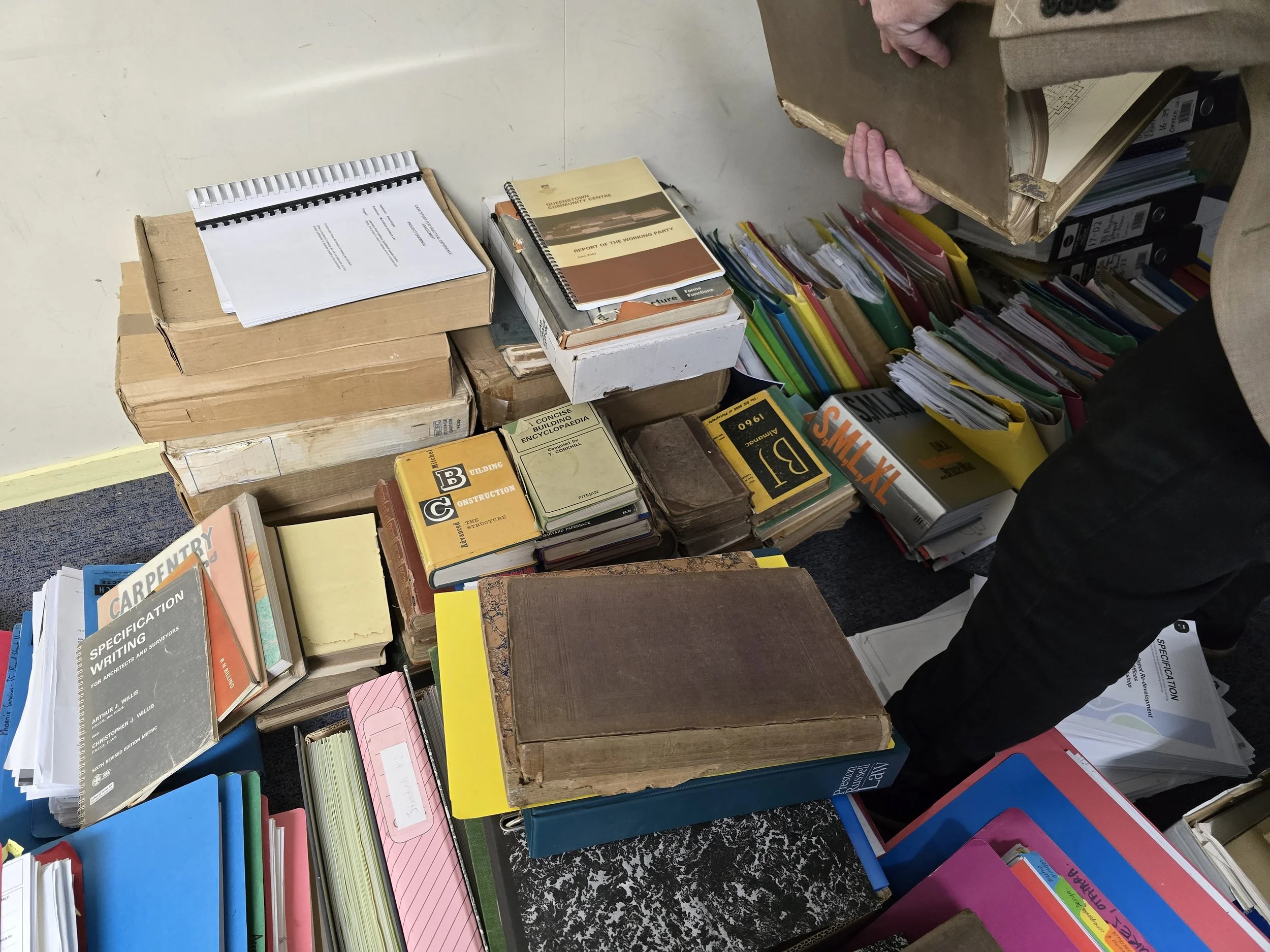
John McCulloch compiled folders of archives that resonate deeply with me—reminders of a time when we routinely photocopied inspirational images, book chapters, and cut-out newspaper or magazine articles, keeping them as significant reference points to return to.
Scattered among these were records of our own practice: photographs, notes, sketches, and writing. I still have my own versions of these folders stored in my garage. McCulloch kept his in his office, alongside an extensive collection of artefacts accumulated over a lifetime of architectural interrogation.
Of course, this method of collecting and storing information has now largely disappeared, replaced by digital archives. Yet there is something captivating about physical archives assembled in this way. They allow us to see an experiential order of things: a tactile timeline of thinking, a collage of influences, and an unfolding relationship to what was happening locally, nationally, and globally.
This physical process of archiving underpins the exhibition. In my last post, I reflected on McCulloch’s focus on pedestrians and the importance of designing town centres that reflect community life. His 1975 thesis lamented the growing encroachment of cars into pedestrian spaces and argued for places where people, rather than vehicles, are drawn together.
Following this thread, a 1989 article titled “Traditional Towns” by Andrés Duany, a photocopy McCulloch kept in his files, describes “a depressing and aggressive analysis of what’s happening in the suburbs.” Duany references Virginia Beach — a landscape dominated by large buildings, retail complexes, car parks, and multi-lane roads. Everything, he purports, is designed for the convenience of cars, moving and parking them, at the expense of pedestrian and therefore social life.
For Duany, commuting by car is no longer a choice but a system reinforced by planning codes that block walkable, mixed-use towns. The result is suburbs with no real public realm, little street life, and no safe reason to walk. These conditions erode social cohesion, “stripping life from our streets.”
Seen through McCulloch’s eyes, the article’s relevance is clear. His work in New Zealand during the 1970s and 1980s faced similar challenges as town centres shifted toward car-dominant planning. By filing Duany’s critique alongside his drawings and notes, McCulloch documented both his process and the wider conversations shaping it.
As I revisit these archives today, I'm prompted to ask: What lessons can we reclaim from critiques of car-dominated planning? How do we re-centre people in our towns and cities? What role do designers, planners, and communities play in shaping environments that support connection, safety, and social life?
These provocations sit at the heart of McCulloch's practice, encouraging us to consider not just how we archive ideas—but how we act on them.