
Experiences Available for Tour
Explore Experiences: Nathan Ingram | John Wishart | John McCulloch
About Nathan Ingram’s Practice
Tour Package (available now)
The experience can be tailored to a variety of spaces. The tour package is made up of the following:
About Nathan Ingram
Schedule of Works
Images of Nathan Ingram: For promotional use.
Display Information
Customisable Experience Options: Including information and examples of large-scale mural works.
Example of Short-Form Content: Accessible to visitors/clients.
Merchandise Options: Can be tailored to audience/client-base.
Contract: Detailing freight, insurance, display and costs.
About Nathan Ingram’s Practice
Nathan Ingram is an artist and designer based in Ōtautahi Christchurch, with roots that traverse fashion and urban art. He first came to public attention through a series of post-quake street projects that captured the imagination of the city, marking him as a distinctive voice in Aotearoa New Zealand’s contemporary visual landscape. Since then, his practice has continued to evolve — shifting between contexts, experimenting with materials, and testing the boundaries of what painting can be. From large-scale exterior murals to delicate glass paintings, Ingram’s work embodies a restless curiosity and an instinctive responsiveness to change.
A defining quality of Ingram’s practice lies in its play between chaos and control. Spontaneous, gestural drawings are carefully translated onto painted and sculptural surfaces, where energy is contained but never subdued. This negotiation between order and disruption animates his work — a dynamic balance between the raw flux of the urban environment and the measured calm of the studio. Through his exploration of line, colour, surface, and texture, Ingram reveals painting as both a physical act and a conceptual framework: structured disruption rendered visible.
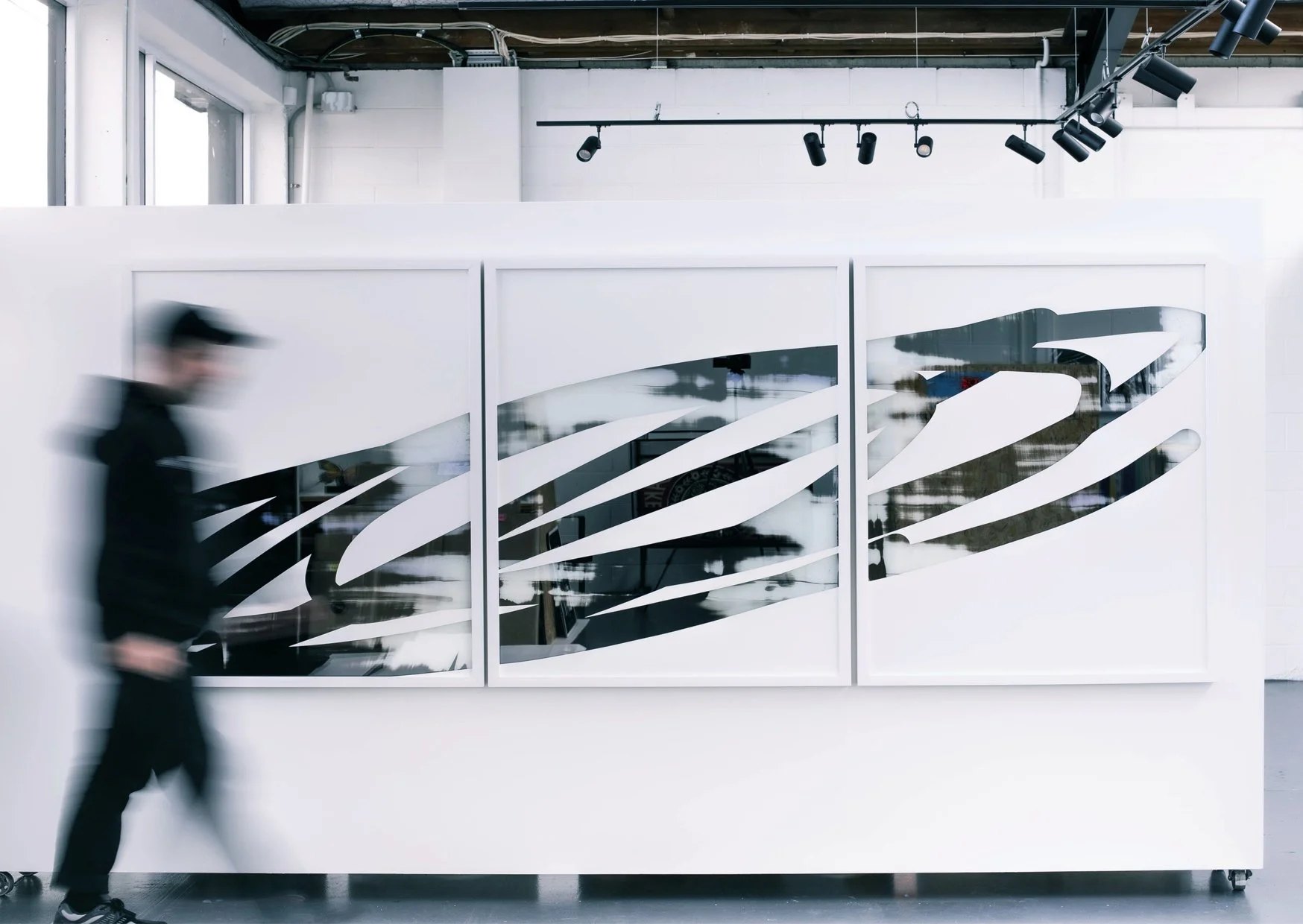
Nathan Ingram, Where I’m Found, 2023
Acrylic Aerosol on Layered Glass
Ingram’s large-scale mural projects extend this inquiry into public space. Installed across façades, laneways, and transitional architectural zones, his murals activate overlooked or peripheral sites — fire escapes, underpasses, half-courts — transforming them into vibrant fields of abstraction. These works emerge from a process of collage and translation: coloured paper shapes are cut, layered, and rearranged into compositions that evoke both organic and built forms. Digitally refined and then rehumanised through brush and aerosol, the resulting murals oscillate between precision and play. Drawing on influences from postmodern glitch aesthetics to riverine and architectural geometries, Ingram’s mural works celebrate complexity — revealing beauty through fragmentation, distortion, and connection. They invite viewers to reimagine how painting can inhabit the city: as both a record of transformation and a reactivation of space.
In works such as Yellow Glow, light becomes an active participant. The powder-coated aluminium form appears to float off the wall, casting shifting shadows that pulse with movement as light changes throughout the day. The matte black face contrasts with a vivid yellow reverse, reflecting off the wall behind to produce a soft radiance — as if the work itself generates its own illumination. This interplay of light and shadow, order and unpredictability, embodies the tensions that drive Ingram’s broader practice.
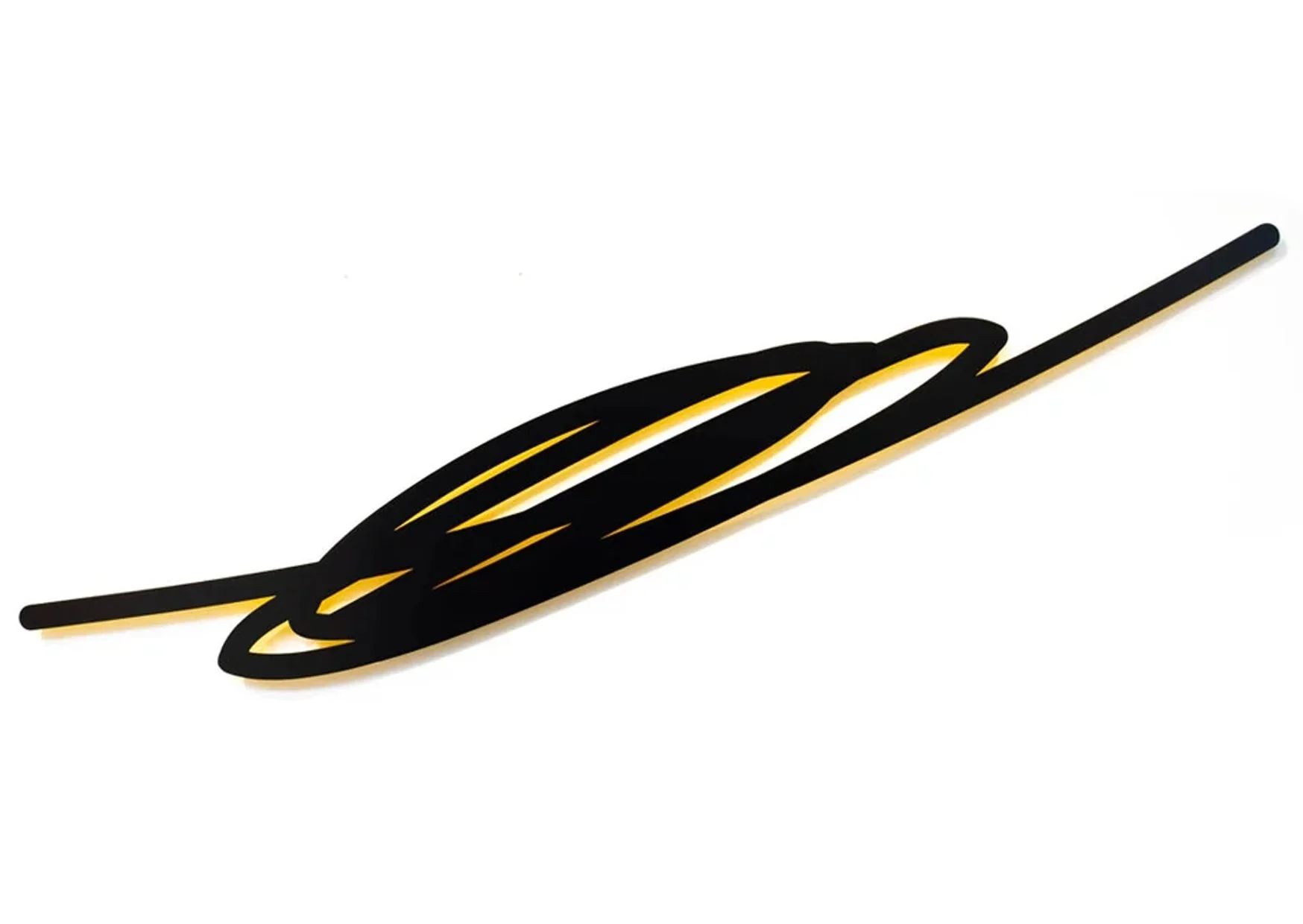
Nathan Ingram, Yellow Glow, 2023
Powder Coated Aluminium
The exhibition also features works from the Superimposition Loops series, where Ingram extends his exploration of space and perception through the translation of drawn scribbles into digital form. Here, bold, saturated colours and layered marks create shifting visual fields that appear to frame and refract the world through painting. These works question how perception is mediated — how our experience of the world can be ‘framed’ through the lens of technology, gesture, and colour. The looping, superimposed lines suggest both the immediacy of drawing and the distance of digital manipulation, collapsing distinctions between hand and machine, spontaneity and system. Through this dialogue, Ingram reinforces painting’s enduring capacity to reimagine how we see and inhabit space.
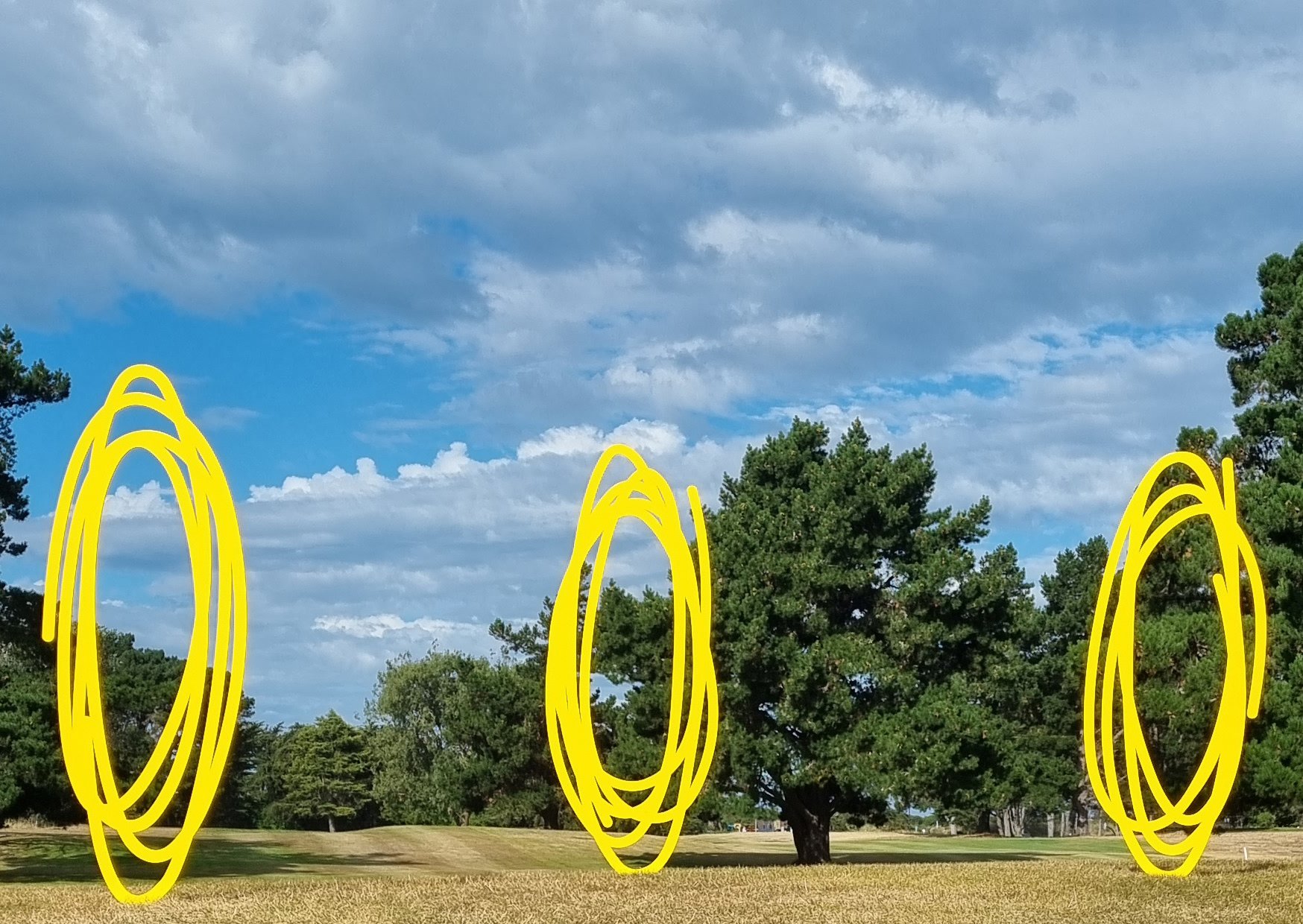
Nathan Ingram, Superimposition Loops, 2024
Powder Coated Aluminum
Across the exhibition, the viewer encounters paintings and sculptural iterations that rehumanise the digital process and embrace experimentation, chance, and transformation. Layers of paint are dragged in unpredictable ways; harmonious and clashing colours meet; structure emerges only to be undone. Ingram’s surfaces are both disciplined and volatile — dynamic records of the physicality of painting, the persistence of gesture, and the presence of the artist’s hand.
Ingram’s work has been exhibited in galleries and museums throughout Aotearoa New Zealand and internationally, with pieces held in the permanent collection of Canterbury Museum. His public artworks are visible across multiple cities, and he has contributed to festivals including Graffiato (Taupō, 2021), Spectrum (Ōtautahi, 2015), Flare (Ōtautahi, 2022), and Shift (2023). The Edge of Order: Painting as Structured Disruption brings together this breadth of practice, presenting an artist deeply engaged with the tensions of his medium — where painting becomes a site of energy, reflection, and continual reinvention.
About John Wishart’s Practice
About John Wishart’s Practice
Abandoned Works draws upon materials salvaged from the shoreline below the Ocean Beach Freezing Works (1892–1991)—a once-thriving industrial site and the first in New Zealand to employ women (in the 1970s). The closure of the Works in 1991, which resulted in the loss of 1,450 jobs, left behind not only an economic void but a physical one: a coastline littered with industrial remnants and the memories of those who laboured there. Historian Dr. Michael Stevens notes that ‘The Beach,’ as it was colloquially known, attracted “hard personalities to do dirty work,” a starkness mirrored in the detritus that continues to surface along the shore.
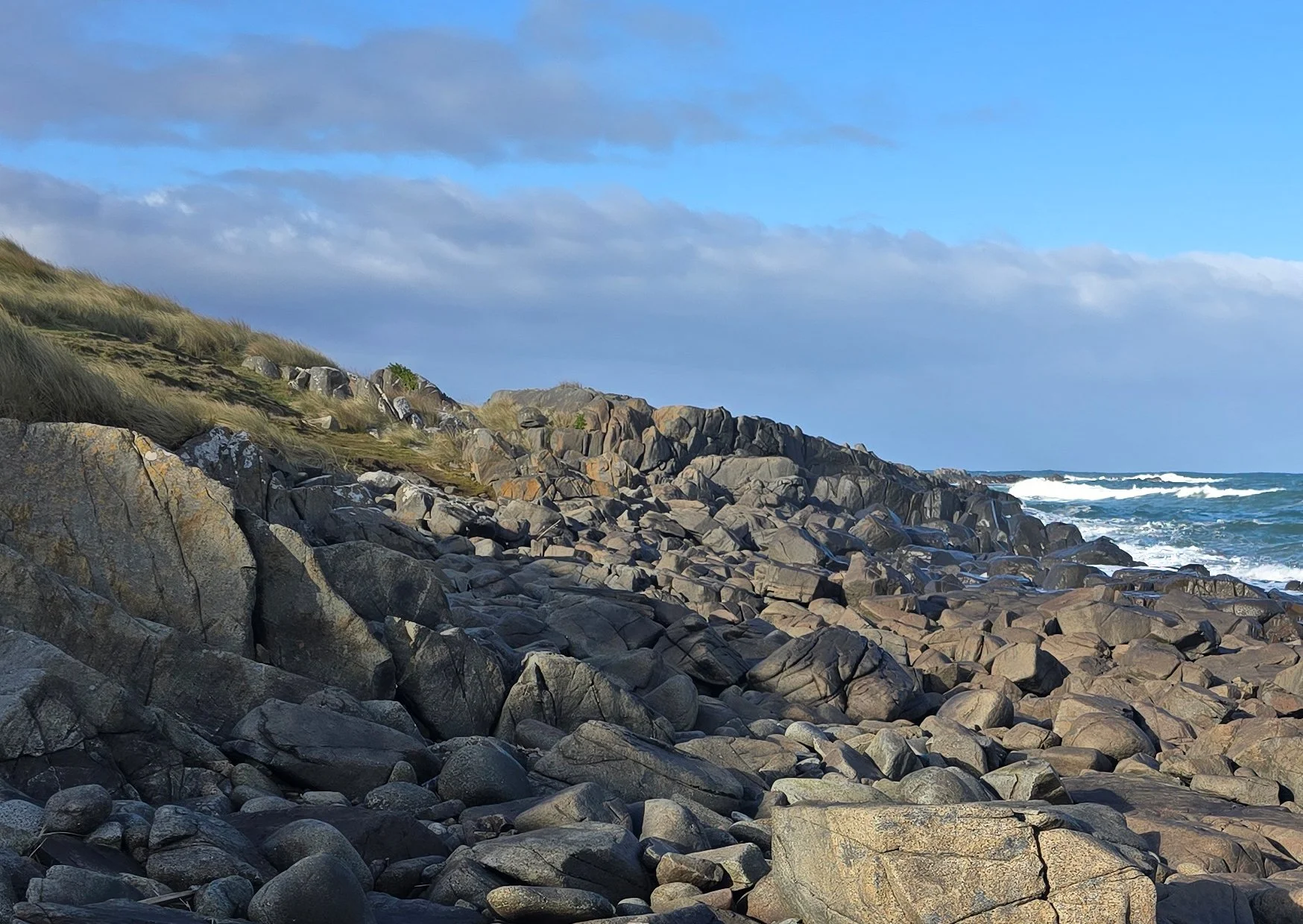
Site of ‘The Beach’, Bluff
In this body of work, Wishart positions the sea as both collaborator and sculptor. Over decades, the ocean has taken discarded fragments of the freezing works and subjected them to a long and patient reworking. Waves abrade sharp edges; tides encrust surfaces with sand, salt, and shell; storms tear open voids and polish others smooth. Through this ongoing process, the sea erodes the certainty of origin: what was once industrial waste begins to resemble the organic, while natural forms begin to echo human manufacture. These ocean-altered objects arrive on the shoreline already transformed, bearing the marks of a negotiation between human intention and natural force.
Wishart gathers these hybrid artefacts and uses them not only as found objects but as points of departure. He creates new sculptural forms inspired by their ambiguities—objects that hover between the recognisable and the unfamiliar, the organic and the engineered. As viewers, we are invited to ask: Is this naturally formed or man-made? This ongoing tension is central to the work, for it mirrors the very uncertainty produced by the sea’s intervention. By blurring categories of origin, the sculptures complicate our assumptions about material histories, authorship, and the boundaries between industry and ecology.
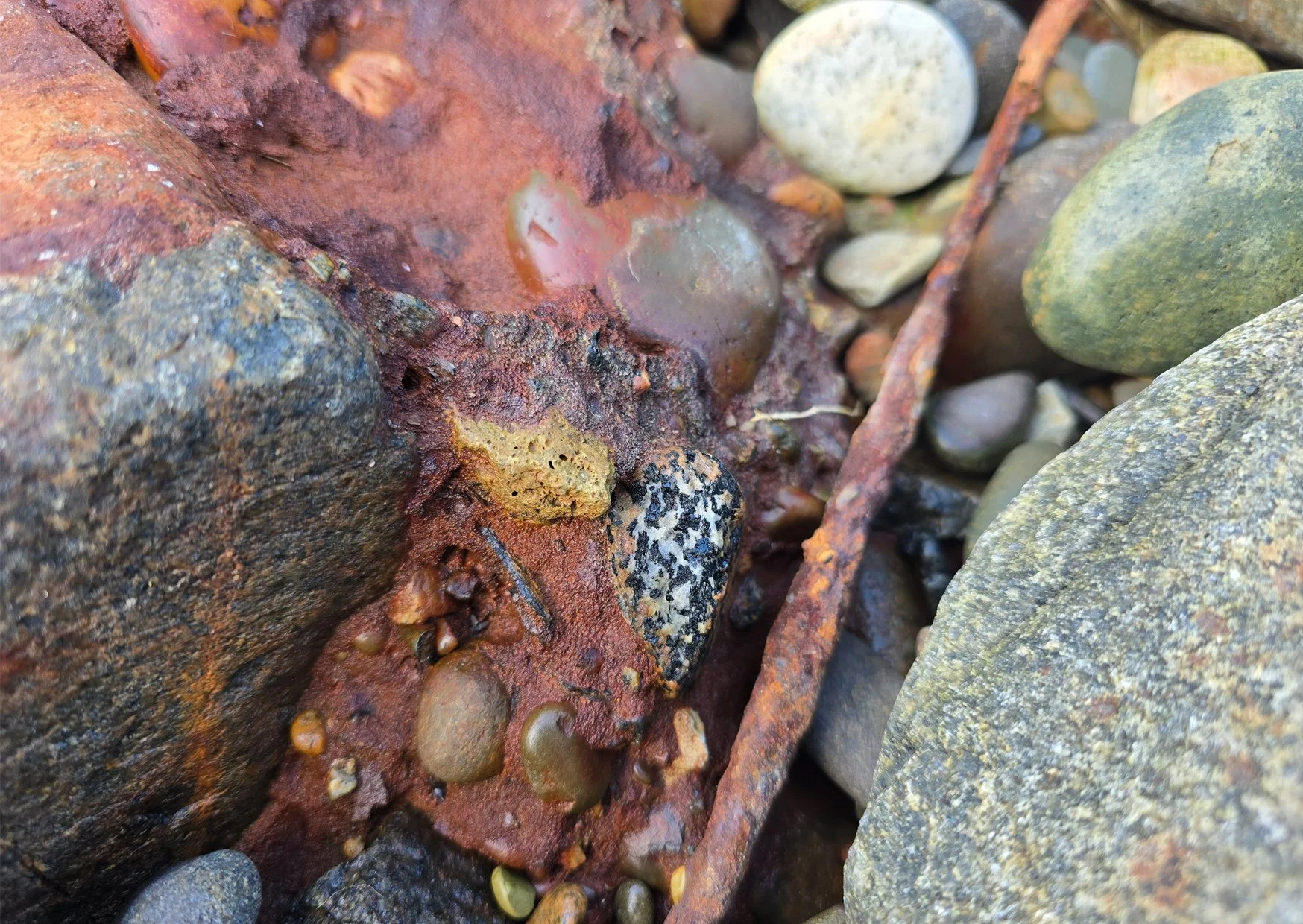
‘The Beach’, Bluff
The title Abandoned Works speaks not only to the derelict freezing works but also to the idea that these objects—and Wishart’s sculptures inspired by them—exist in a state of becoming. Like fossils, archaeological fragments, or museum artefacts excavated from uncertain contexts, they appear suspended in time: neither fully of the past nor the present, neither wholly finished nor truly discarded. Weathering, erosion, and accretion become forms of authorship. The sea continues the work that industry began, and the artist, in turn, extends this chain of transformation. Each sculpture captures a moment within an endless cycle of making, unmaking, and remaking.
As Wishart writes:
“The beach at the foot of its ramparts is strewn with the detritus of past lives... Along with the residua of shells, carapace and kelp lie the artifacts of occupation – bleached buoys, concrete slabs rounded, bouldered, ribs still showing, bottles beaded and blasted, transformed into objects of an uncertain provenance, an uncertain beauty. It has been my joy as a sculptor to cast these objects, or at least their simulacra, and the spirit residing in them onto our urban shores in the hope that they may re-occupy our own barren and abandoned places.”
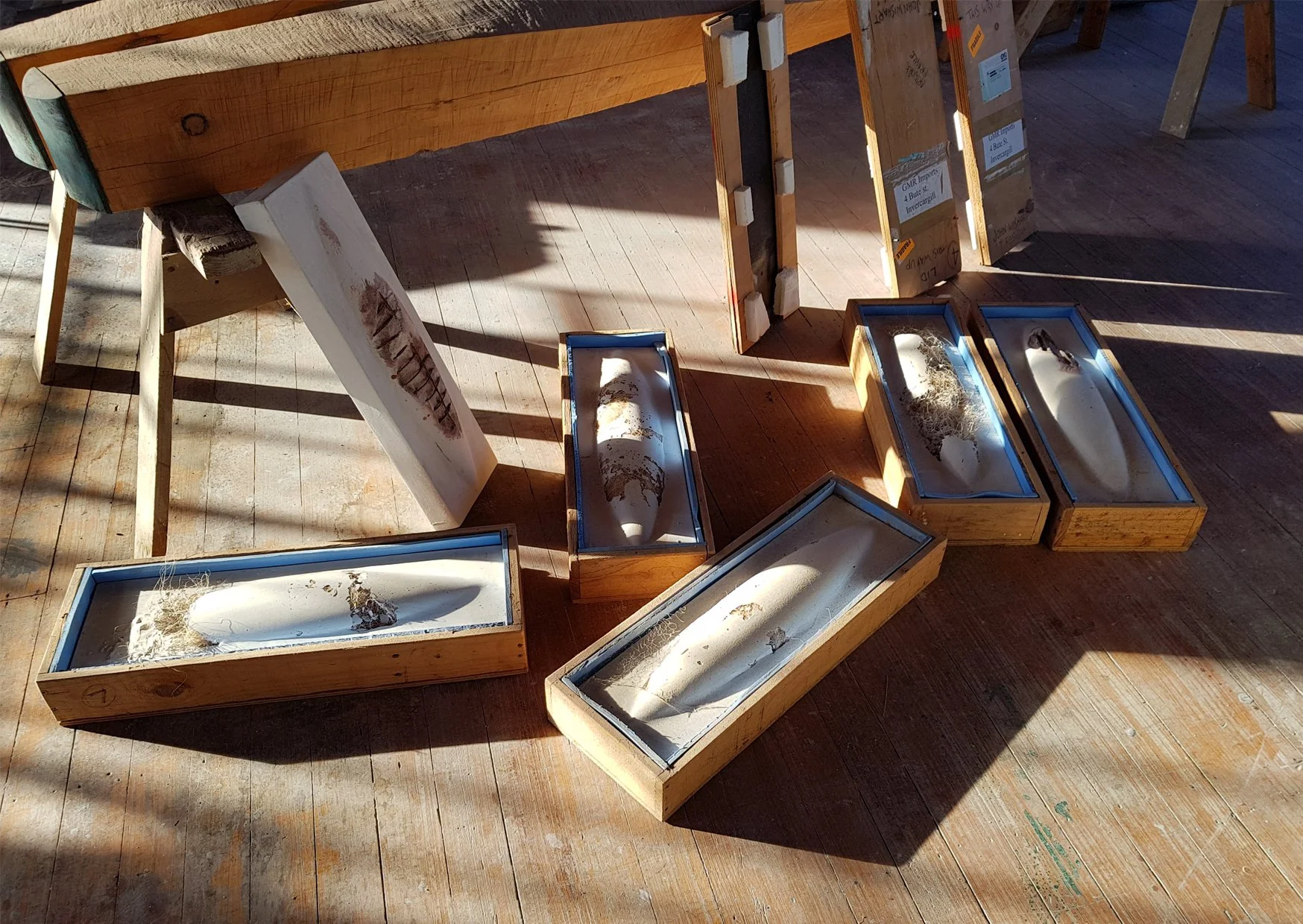
John Wishart, Ocean Beach Series, Studio, Invercargill
Through these sculptural investigations, Wishart meditates on the interplay between industry and nature, permanence and erosion, memory and materiality. By bringing these fragments—both found and newly created—into the present, he asks us to confront our assumptions about what is natural, what is human-made, and what emerges in the liminal space between. In doing so, the works invite contemplation, curiosity, and a renewed attentiveness to the stories embedded in the overlooked materials of our shorelines.
Wishart completed a Bachelor of Fine Arts in Sculpture at Otago Polytechnic School of Art in 1996 and later undertook postgraduate studies at Elam School of Fine Arts in Auckland, where he studied under renowned artists Selwyn Muru and Brett Graham. His practice reflects a longstanding engagement with Southland’s histories, both personal and collective, and with materials that bear the marks of time, transformation, and abandonment.
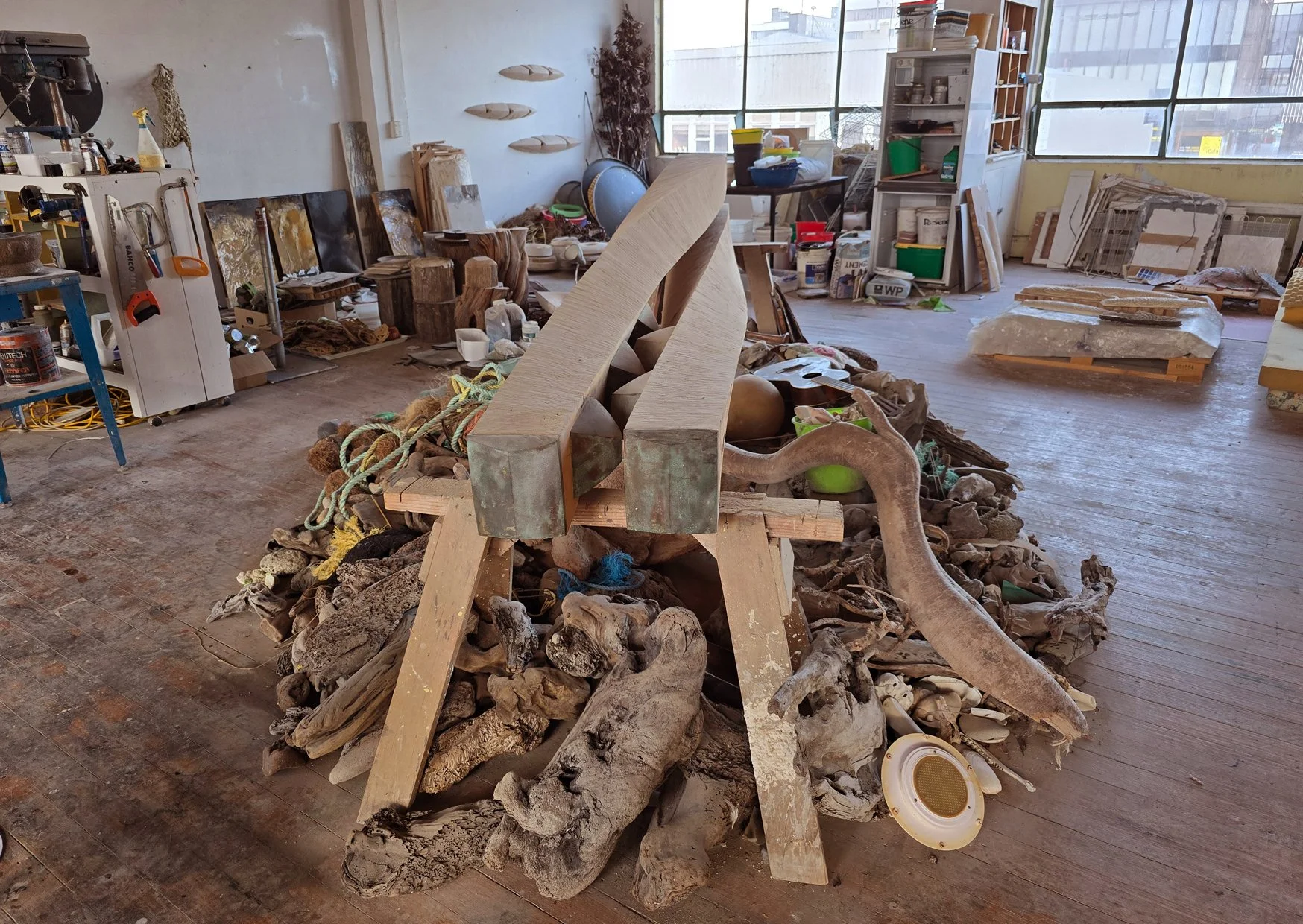
John Wishart’s Studio
Stevens, Michael. NZ Museums, Text for photograph Ocean Beach Slaughter-men and Labourers, 1921, unknown photographer. Supplied by the Bluff Maritime Museum. Retrieved from https://www.nzmuseums.co.nz/collections/3234/objects/936488/photograph-ocean-beach-slaughtermen-and-labourers
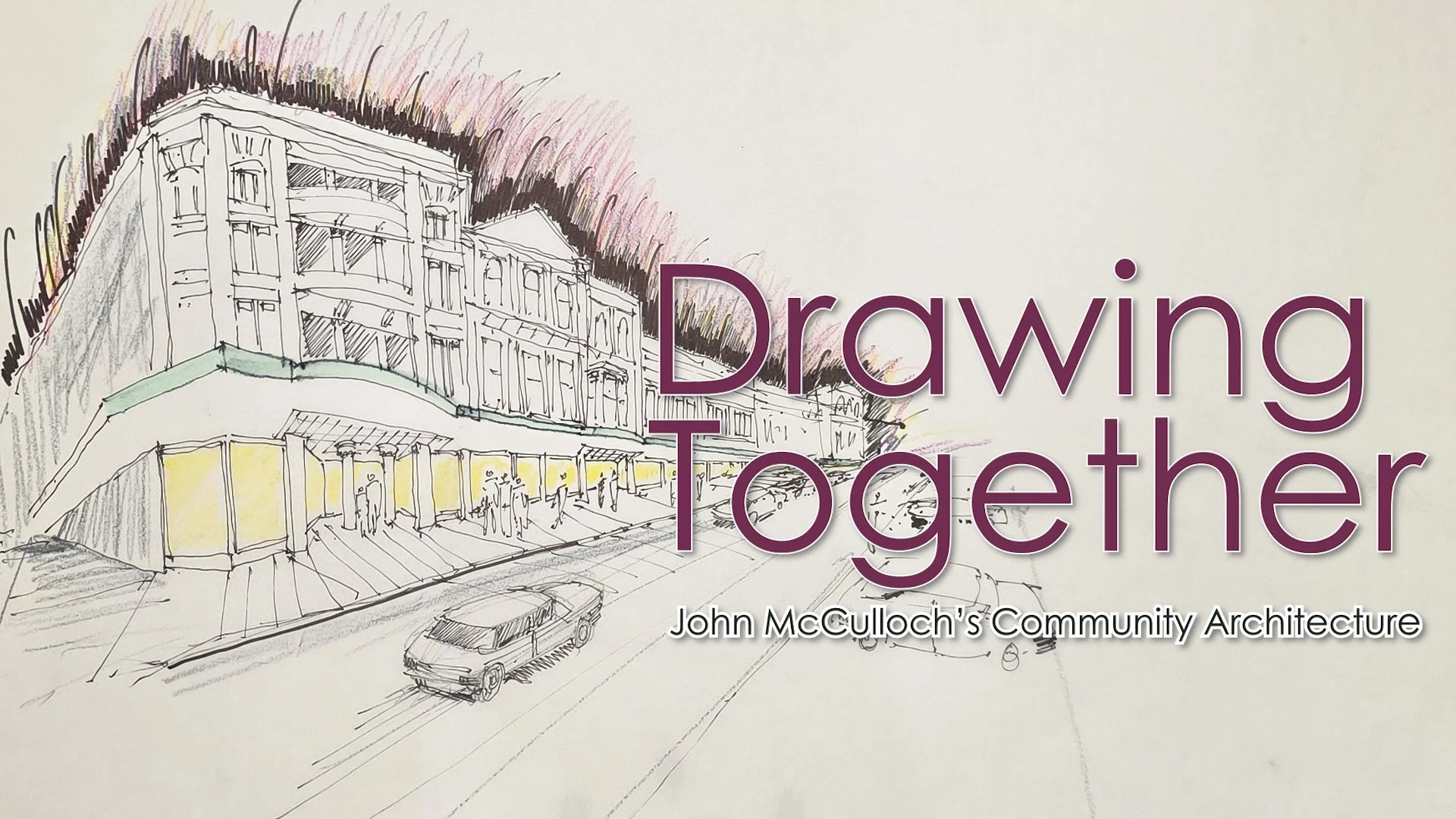
Rex Capil talks about both his professional relationship, and his friendship with John McCulloch
Drawing Together is an experience design currently in progress. You can stay up to date with how the project is evolving on my blog.
An Experiential Framework for Community-Based Architecture
John McCulloch: A Conspicuous Motivator
Piopiotahi Milford Sound and the Architecture of Visitation
Drawing Together: John McCulloch and the Architecture of Civic Life
An Experiential Order of Things
Are Pedestrians Still Loved? Revisiting John McCulloch’s Vision for Invercargill
About John McCulloch’s Practice
John McCulloch was a prolific and highly respected architect who practised in Invercargill from 1976, completing more than 600 commissions across Southland and the wider South Island. A proud “Wallacetown boy,” he remained deeply connected to his region, championing architecture that responded to community, place, and culture. As principal director of McCulloch Architects, he developed a reputation for designing and managing innovative, award-winning projects across a remarkably diverse portfolio — from aquatic centres, stadiums, and visitor terminals to community facilities, housing, heritage restorations, and urban design initiatives.
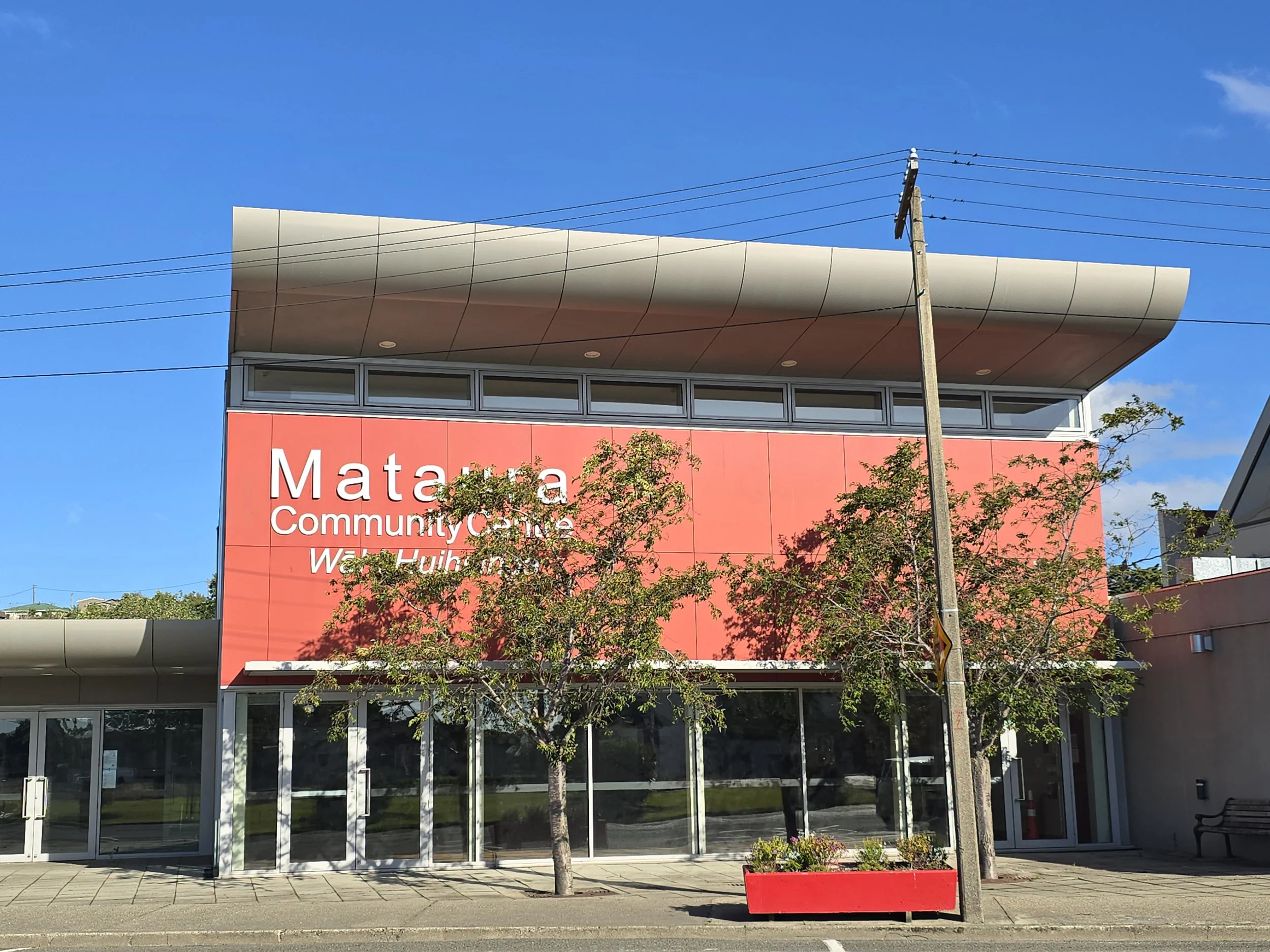
Mataura Community Centre
After completing his Bachelor of Architecture in 1975, McCulloch broadened his perspective through international travel, including an eighteen-month research journey through North America with his family, and study tours examining aquatic facility design. These experiences strengthened his confidence to take on larger and more complex civic projects, including Splash Palace (1993), Stadium Southland, the Gore Multi-sports Complex, and Rugby Park Stadium — projects that combined multiple functions while remaining accessible and socially connected to their communities.
Central to McCulloch’s practice was the idea of community architecture: buildings designed not only to serve practical needs but to act as social anchors. Projects such as the Stewart Island Community Centre, Wallacetown and Mataura community centres, Te Hikoi Museum in Riverton, and the Milford Sound Visitor Terminal demonstrate his human-centred approach, balancing functionality, accessibility, and a strong sense of place. His work on Invercargill’s inner-city revitalisation, including the Māori/Celtic Wall at Bank Corner, reflected his belief that architecture should represent the identity and heritage of the people it serves.
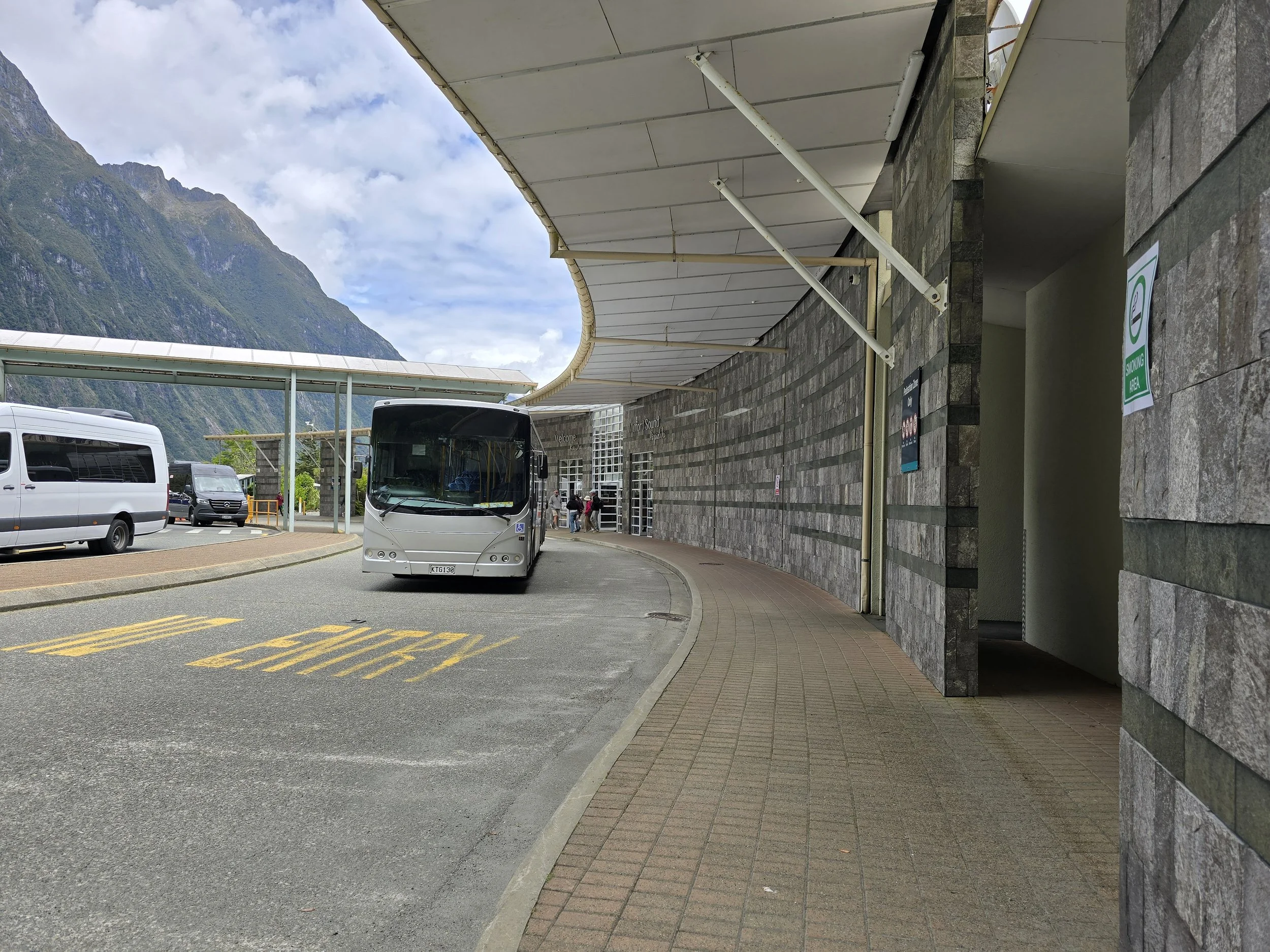
Piopiotahi Milford Sound Visitor Terminal
McCulloch was also a committed advocate for heritage preservation, opposing the demolition of historic buildings for short-term gain and supporting adaptive reuse as a pathway to future community value. Whether designing large civic facilities, modest homes, or Department of Conservation huts, he approached each project with curiosity, generosity, and a collaborative spirit, mentoring younger architects and engaging closely with communities.
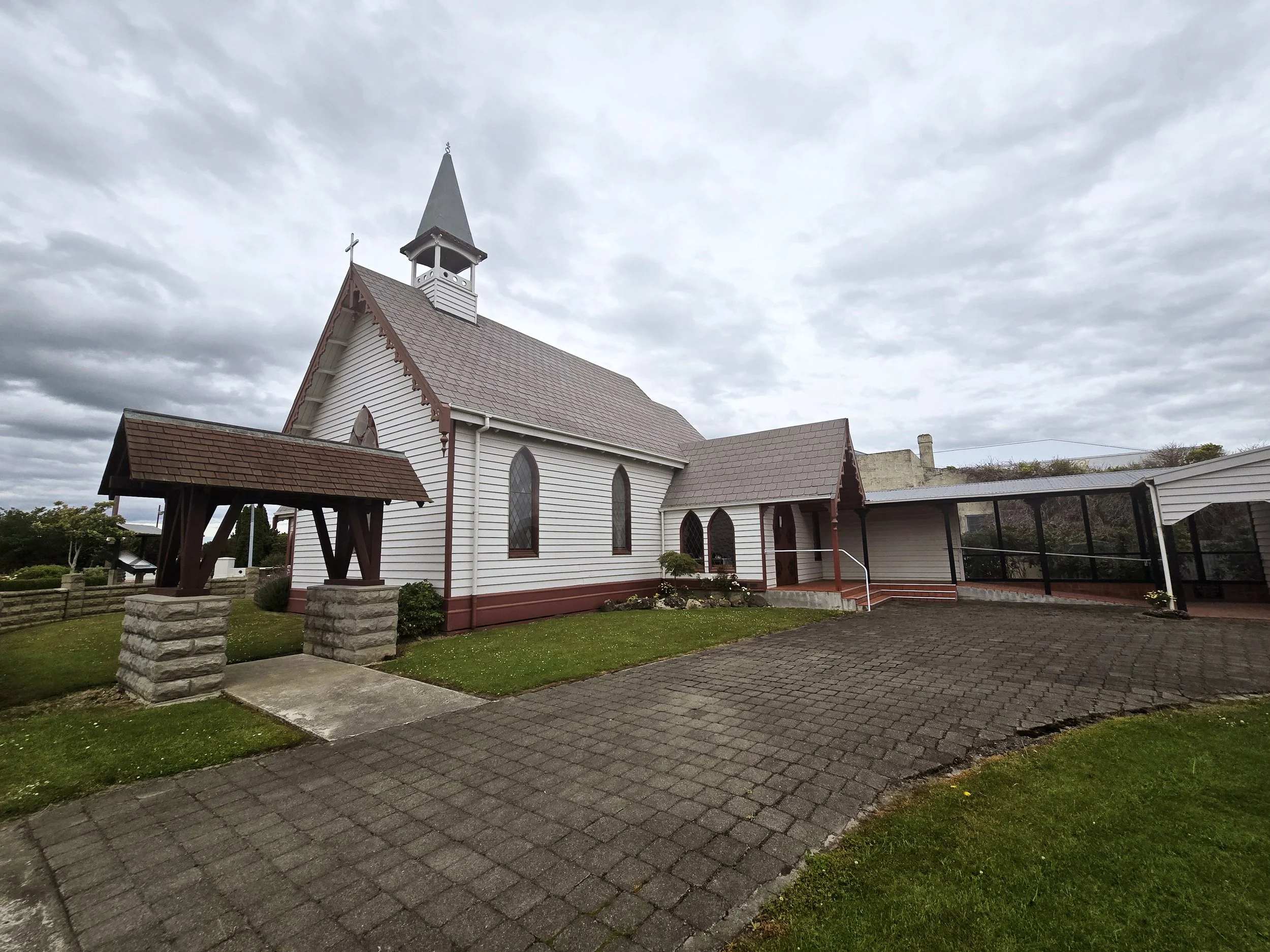
Holy Trinity Church Restoration, Winton
Drawing Together explores McCulloch’s legacy through the lens of participation, storytelling, and shared experience — revealing how architecture can connect people, strengthen communities, and shape regional identity. His work demonstrates that architects can be catalysts for both social and spatial transformation.