With art history evolving across education at all levels, I’ve been reflecting on its potential to equip learners for today’s image-saturated world.
At its best, art history has always been about more than artists and movements. It teaches us to read images — to ask who made them, why, and how they became part of art history, including questions of representation and cultural context.
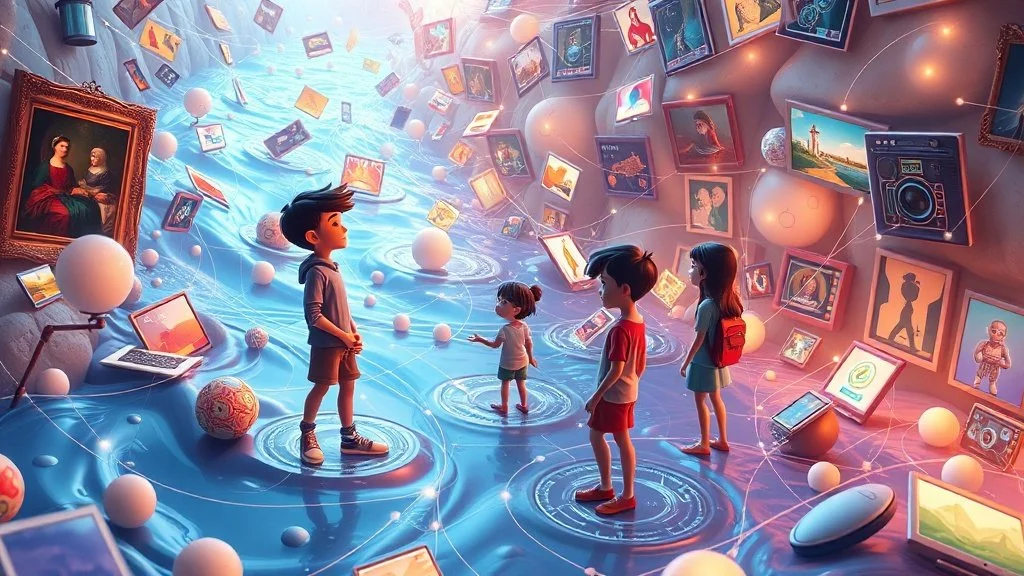
Today, access to images has changed dramatically: they are available on demand, 24/7, across mainstream media, social media, streaming platforms, video games, and AI-generated content. That constant exposure makes the ability to engage critically with images more important than ever.
The democratisation of image-making has also changed the game: anyone can upload a video, create a documentary, design a game, or generate AI content. This raises critical questions for learners: Who created it? Why was it made? Whose perspectives are represented, and whose are missing? What impact does it have on audiences and culture?
At the same time, the reality is that not enough learners are choosing art history, which means its value is often not fully understood. The pathways into creative industries are also complex: over 80% of people working in the sector don’t hold formal creative qualifications, and of those who do, most do not go on to work in the field. This highlights the need for a curriculum that equips all learners with the skills to engage critically with visual culture — whether or not they follow a creative industries pathway.
Some questions I keep returning to:
Should art history continue as a standalone subject, or be integrated into a broader curriculum of visual culture and media literacy?
How can it combine theory, practice, and technology to remain relevant and engaging?
What value does it bring to learners making subject choices with future careers in mind — in design, marketing, journalism, politics, or education?
How do we ensure it develops pressing real-world literacies while maintaining the cultural depth that has always made it meaningful?
Reimagining art history isn’t about replacing it — it’s about enhancing it. By connecting traditional knowledge with contemporary visual culture, we can equip learners with the tools to critically interpret and engage with images across all platforms, from classical artworks to AI-generated content.
The ability to question, decode, and contextualise images is more than an academic skill — it’s a vital competency for navigating the 21st century.