Agility has become one of the most sought-after capabilities for the future of work. As technologies evolve and the ways people contribute, create value, and navigate their careers become increasingly complex and unpredictable, people need to solve unfamiliar problems, collaborate across disciplines, and continue learning throughout their lives.
Agility is not simply about preparing people for a particular role; it is about developing the capability to navigate unfamiliar contexts, respond to emerging needs, and continually adapt. These capabilities are not taught through curriculum alone — they are experienced by learners through the way an institution responds, adapts, and learns, and through the culture, systems, and ways of working it models.
This raises an uncomfortable question:
Can an institution that lacks agility genuinely teach it?
If institutional decision-making is slow, innovation is discouraged, and new ideas are constrained by processes, the institution communicates how it really operates. The culture becomes the curriculum.
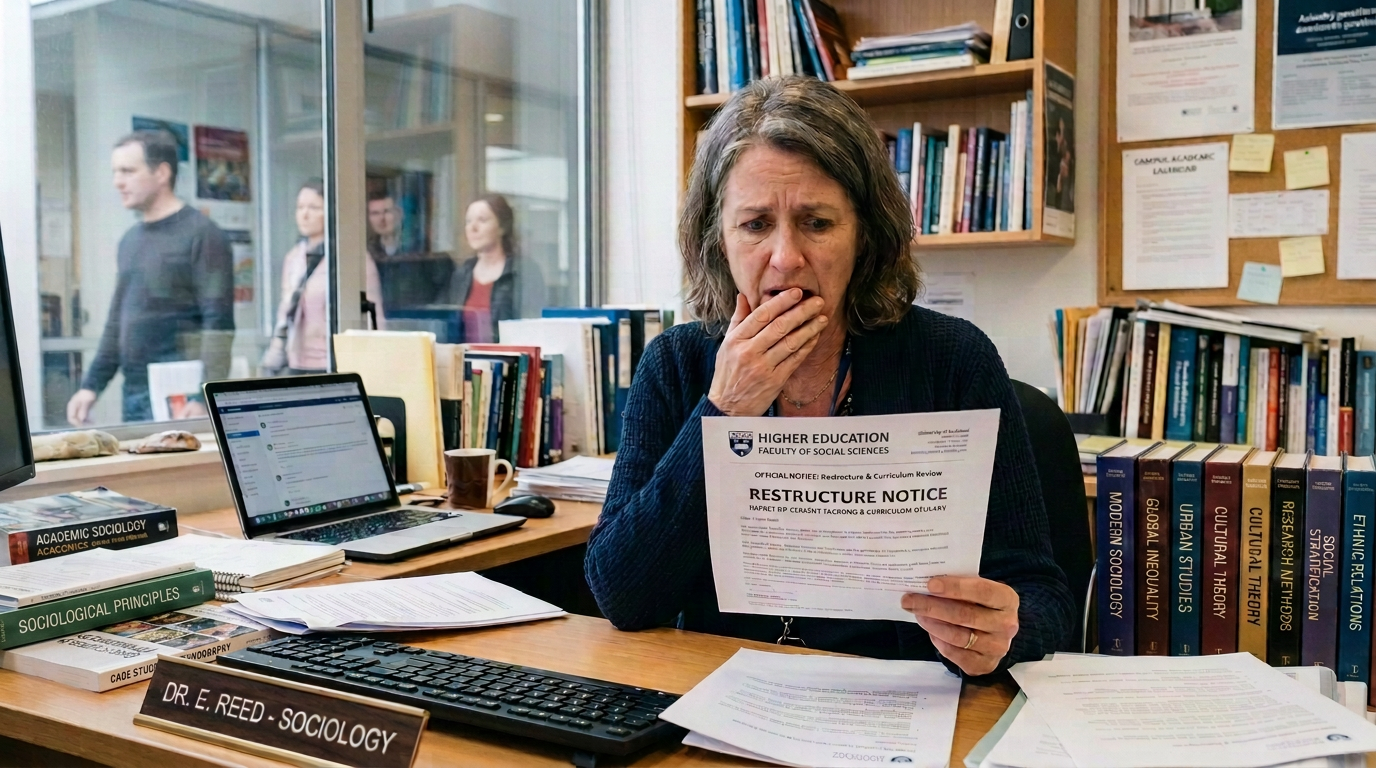
When adaptation is experienced as continuous and incremental learning and improvement, people are more likely to approach uncertainty in the same way. However, when organisational shifts are associated with restructures, redundancies, or sudden and unexpected decisions, people understandably learn to see change as something to endure rather than shape.
This creates a contradiction. We expect institutions to develop learners who can navigate uncertainty, while the organisation itself is communicating that uncertainty should be avoided.
Agility is the ability to notice emerging challenges and opportunities, respond early, and improve continuously. It is an organisational habit that must be practised.
Our responsibility is not simply to prepare learners for their first employment opportunity. It is to prepare them for a lifetime of adaptation within a changing world of work.
The classroom matters, but it is not the only place where learning happens. Learners experience an institution through its systems, processes, communication, relationships, decisions, and culture. They learn not only from what educators teach, but from what the organisation demonstrates.
The experience becomes the education.
If we want graduates who can navigate an uncertain future of work, our institutions must first become the kind of organisations they want learners to experience, contribute to, and build.
Because a learning institution that lacks agility cannot teach agility.