Debate continues about whether higher education is a business. Within the sector, there is often a strong reluctance to use that language. Many prefer to see education as a public good rather than a commercial enterprise.
But what if we considered this question through a different lens? Rather than focusing on whether vocational training generates revenue, we could ask: does it operate according to the principles that underpin successful businesses?
Businesses do not begin by asking: What product do we want to create? They begin by asking: What problem needs solving? Who has that problem? And what solution will effectively solve it?
Vocational training exists to support transitions into work — whether that means entering a career, changing direction, freelancing, progressing in employment, or responding to changes within an industry.
But vocational training does not serve only one group. It must understand the needs of multiple groups whose problems it exists to solve.
Learners need pathways that help them achieve their career goals. Employers and industries need people with the skills, capabilities, and adaptability required for workforce needs. Communities need a workforce able to respond to economic and social change.
So, if we apply a business lens, we might ask does vocational training:
• understand the career problems learners are trying to solve?
• understand what employers, industries, and communities need?
• design qualifications and learning experiences around those needs?
• know whether graduates achieved the outcomes they hoped for?
• maintain relationships with graduates to understand how their needs evolve?
• use what is learned to continuously improve what is offered?
Businesses do not simply create products. They solve problems, understand the people they serve, test whether their solutions work, and adapt as circumstances change.
Now consider vocational training in New Zealand.
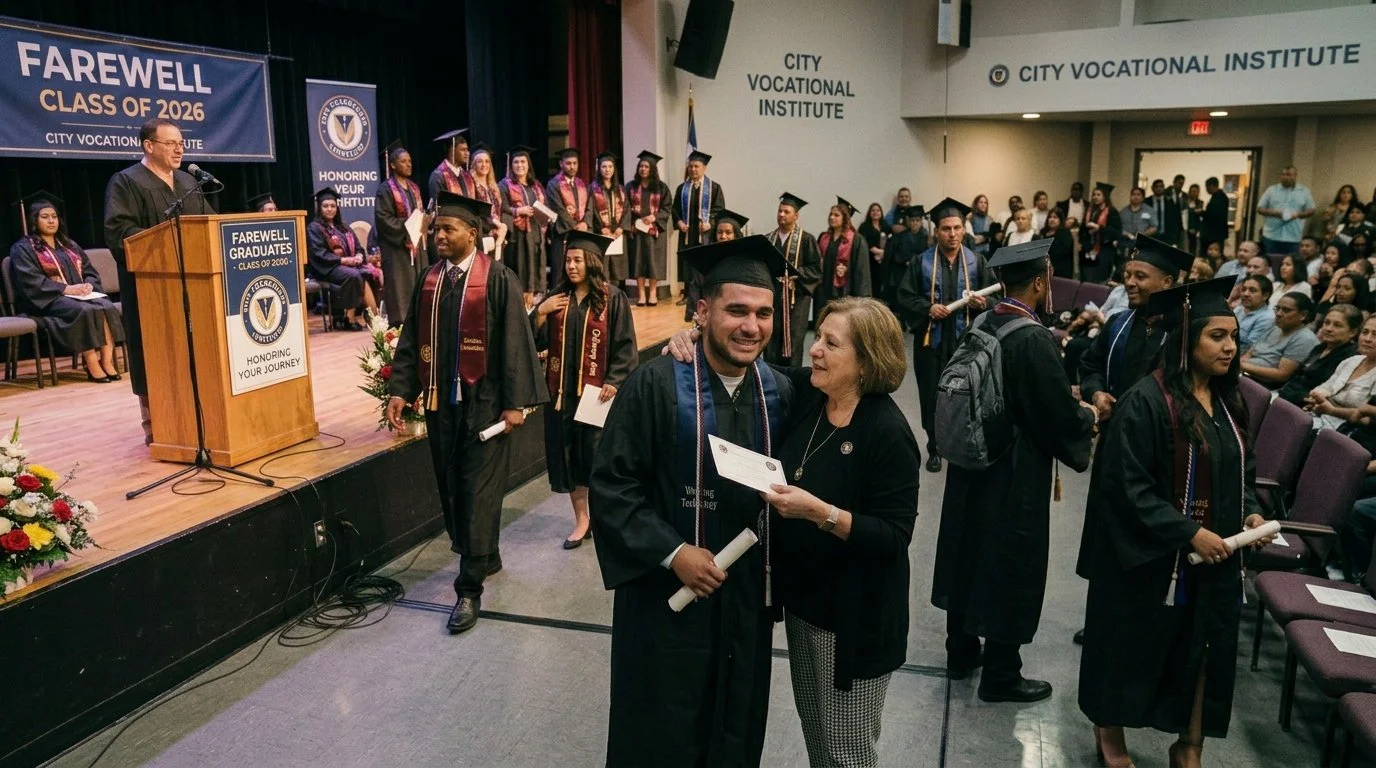
Learners often commit one to three years of their lives to a qualification. They invest significant time, effort, and money. We support them through their learning journey, celebrate their graduation, and then, in most cases, the relationship ends.
Imagine any business investing so heavily in understanding, attracting, and supporting customers, only to stop engaging once the first product has been delivered.
Businesses understand that their relationship with customers does not end when a product is delivered. They continue to learn from customers, identify emerging needs, and develop new solutions.
Perhaps this is one of the clearest examples of why vocational training does not operate like a business.
Do you think vocational training in New Zealand is a business?