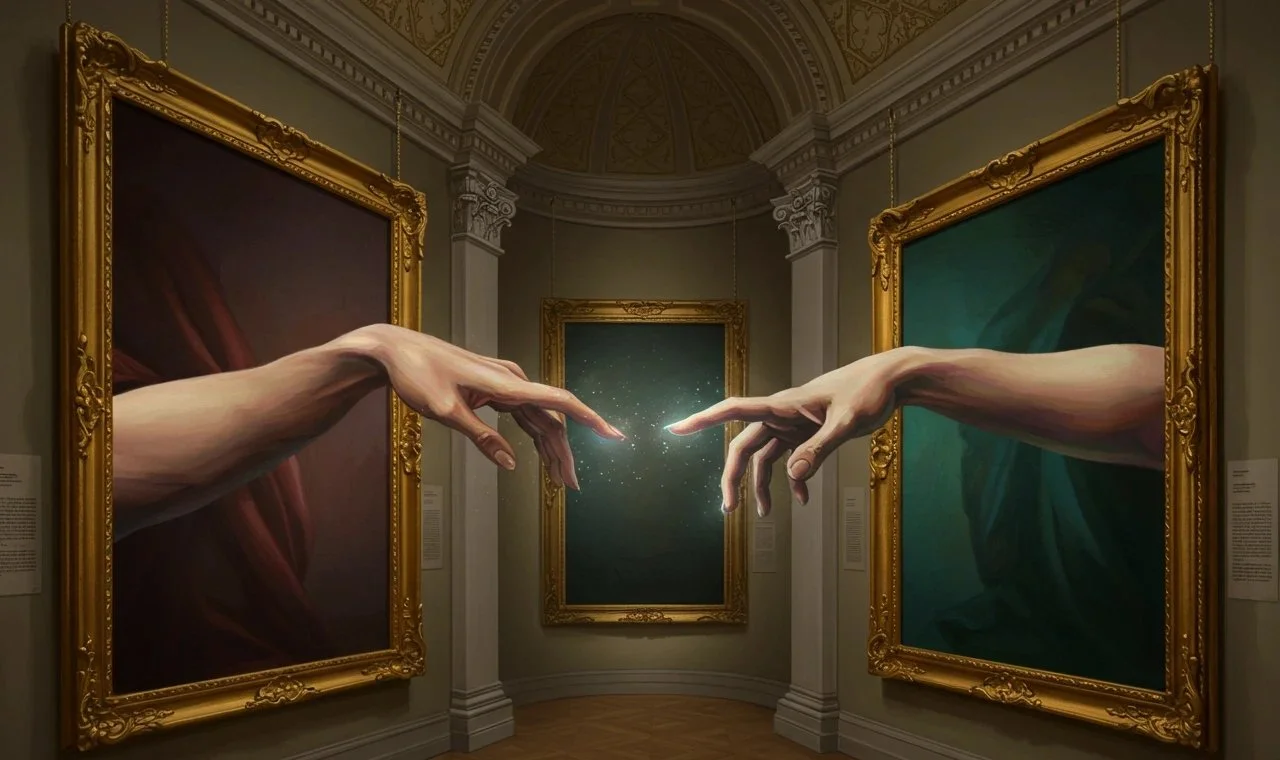
For me, a great exhibition is grounded in process. An exhibition reflects a moment in a process — a fluid architecture of the questions, conversations, experiments, and decisions that are still unfolding.
Traditionally, the people we hope to engage are framed as audiences, visitors, or viewers. We constantly ask ourselves: what do visitors want? How do we attract more of them? In doing so, we reinforce the very distance these terms create. They position people as observers of a completed work rather than participants experiencing a living process. The exhibition becomes a product to be consumed, rather than an intentionally pursued space where engagement actively shapes ideas.
In the conventional approach, exhibitions are presented as completed works, and those who engage with them are positioned outside the process that created them. The research, debates, testing of ideas, false starts, and shifts in direction are largely invisible.
Yet exhibition-making is inherently iterative. It responds to new questions, new information, and new perspectives as ideas develop. The process evolves through dialogue between artists, curators, designers, technicians, institutions, and the communities connected to the stories being explored.
The most exciting part of an exhibition happens in that making. It is the stage where ideas are unpredictable, where the direction is open, and where the shape of the story is actively in motion. So why do we continue to position the publics we serve as visitors, audiences or viewers, and then wonder why we are not getting the numbers of ‘visitors’ we want through our doors?
It is like arriving at a party after everyone has gone home. The energy, the conversations, the experimentation that gave the exhibition life have already happened — and ‘visitors’ are asked to respond only to the echoes of that process. Meaning feels fixed, and the opportunity for people to influence or participate in the work is lost.
So what if we invite people to join the party, rather than view the aftermath?
When people are engaged while the work is still forming, they move from observers to participants. Their questions, perspectives, and experiences become part of the conversation, shaping how the exhibition develops. The exhibition becomes an artefact of engagement with communities — still in motion, still provisional, still generating meaning.
Like a party, this process can be messy and unpredictable, but that is precisely the point. Exhibitions are not products to be packaged and delivered; they are relational, iterative experiences that gain richness from the interactions, surprises, and negotiations that happen along the way. Meaning is never fixed, and the work continues to evolve as people respond, reflect, and participate.