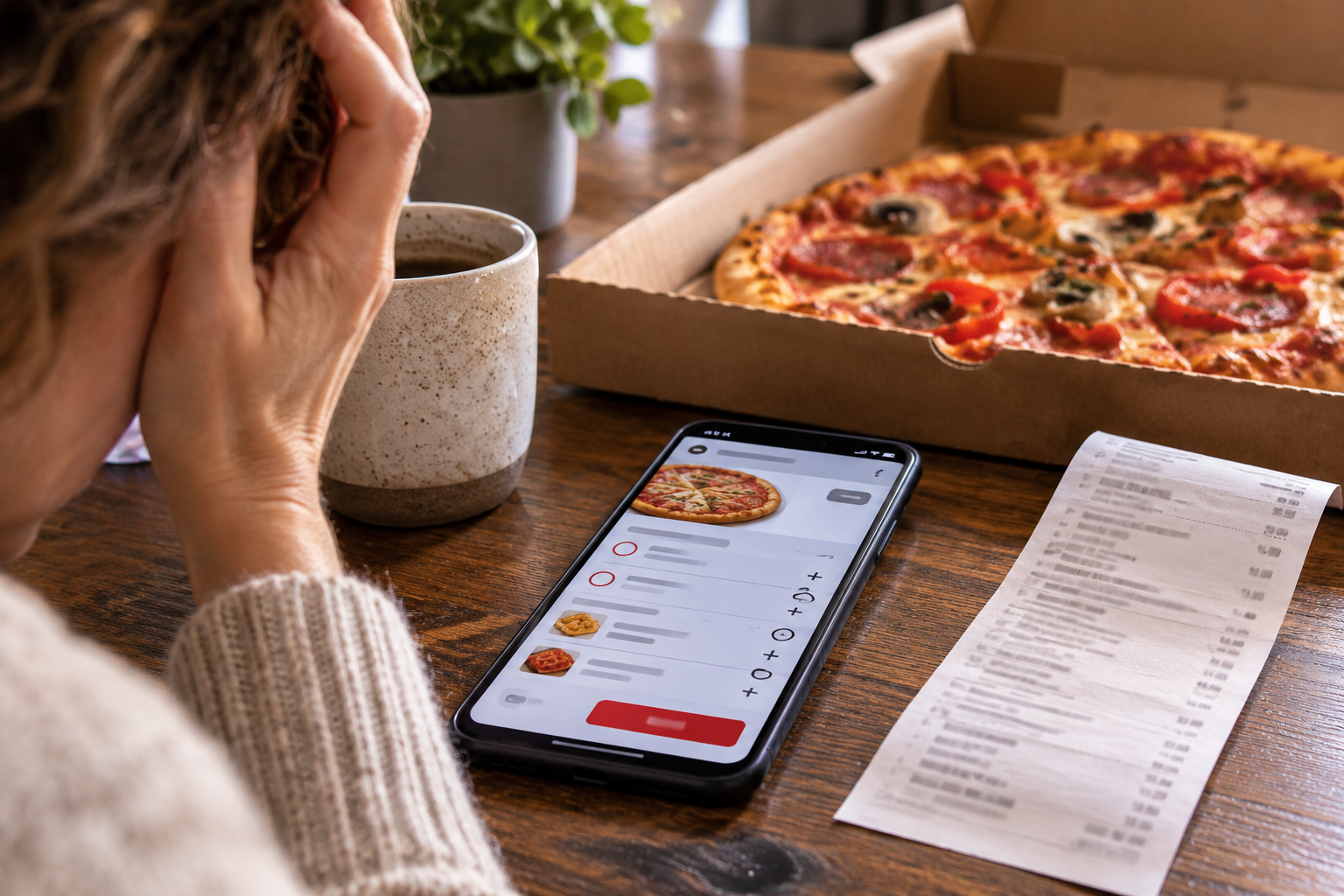
After more than five hours on the road, arriving late at our destination, my husband and I had one fairly modest ambition: order a pizza and have an easy night.
How hard could it be?
As it turned out, surprisingly hard.
We tried two of New Zealand's large pizza chains. Both were employing remarkably similar tactics. What should have been a straightforward transaction became a frustrating exercise in navigating confusing menus, deciphering deals, identifying additional charges and trying to establish what we would actually pay.
There was a time when ordering a pizza was simple. Choose your topping. Choose from two or three sizes. The price was clear. That was what you paid for the pizza. No complicated calculations, no surprises at checkout, no need to decipher a maze of conditions to understand the advertised price.
Now, pricing transparency seems to have taken a back seat to sophisticated digital sales strategies.
Menus make meaningful price comparisons difficult. Advertised deals obscure exclusions. Additional costs emerge as you progress through the ordering process. Bundles, upgrades and add-ons encourage spending beyond your original intention. The actual cost can become surprisingly difficult to establish until you've invested time navigating the system.
And this is where experience design becomes particularly concerning.
Algorithms, behavioural design and commercial optimisation techniques can all be used to influence purchasing decisions, encourage upgrades and maximise transaction value. There's nothing inherently wrong with suggesting products or offering deals. The problem arises when the design makes it harder for customers to understand their options, compare prices or make informed decisions.
There is a fundamental difference between designing an experience that helps customers make good decisions and designing one that exploits the way people make decisions. Good experience design should reduce cognitive load, make information accessible, provide pricing transparency and support informed choices. Customers shouldn't have to work hard to establish what a product costs or discover the real price only after navigating multiple layers of offers and extras.
When the commercial objective takes precedence over the customer's ability to make an informed choice, the design can become distinctly predatory. And when two competing businesses appear to be using the same playbook, it's worth asking whether customer experience has become secondary to the pursuit of greater transaction value.
Fast food was supposed to be easy, convenient and affordable. When businesses make it unnecessarily difficult for customers to understand their choices and the prices attached to them, they've lost sight of what a good customer experience should be.
Optimising the transaction at the expense of the customer is not good experience design. It's exploitation by design.