I have been reading commentary that asserts tertiary education, in its present form, will be gone in five years. It is a bold claim that highlights a real pressure point: cost versus perceived value.
Tertiary education is expensive. Fees, living costs, lost income, resources, and time commitment all shape decisions. Your potential customers increasingly ask: is it worth it? Do your products deliver real value for the investment required?
The sector is already under strain. Programme cuts, restructures, and closures are occurring internationally. Pandemic recovery and AI dominate headlines, but beneath those factors sits a deeper issue: the value proposition of tertiary education is no longer self-evident.
For some, the language of business — products, customers, value proposition — feels uncomfortable. There is a fear it reduces education to transaction. But acknowledging that people weigh costs, benefits, and alternatives does not diminish education; it recognises reality. People invest time, money, and effort. They consider opportunity costs. Ignoring that framework weakens education’s ability to compete for trust and commitment.
Like any costly service, the benefits must be clear. Yet institutions often communicate process — papers, credits, pathways — while customers ask a more personal question: what will this enable me to do?
There are now credible alternatives. High-quality learning is widely available online, often for free. Self-directed development has never been more accessible. If people can learn on demand at home, where does the value lie for institutions with physical campuses and nine-to-five timetables?
The answer is experience — but only when intentionally designed.
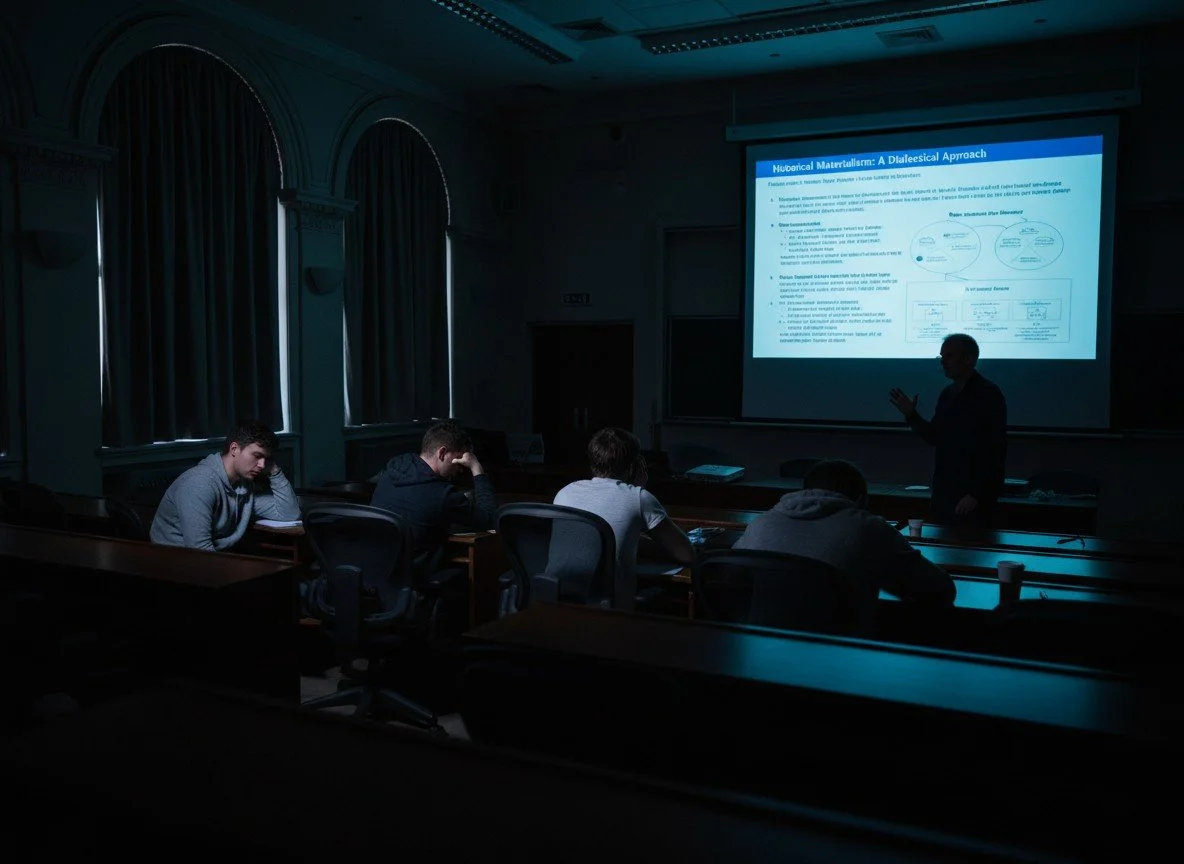
Sitting in a two-hour lecture at 9am that could have been watched online offers little value. Travel, cost, and effort must be justified. Presence alone is not enough. Value comes from active participation: hands-on learning, collaborative problem-solving, and access to specialist equipment. From direct interaction with industry professionals who may become future colleagues. From opportunities to test ideas, receive feedback, and improve in real time.
Equally important is learning alongside peers. Showing up creates accountability. Conversations continue beyond structured learning. Confidence grows through shared challenge. Motivation is sustained through belonging which helps explain why fully online products often experience high attrition. Without community and relational accountability, persistence is harder.
This is not to say online learning lacks value. It is flexible and essential. But it reinforces this key point: experience design shapes engagement, outcomes, and return on investment. Physical campuses are valuable not for the buildings, but for the experiences they enable people to engage with together.
Because customers are not buying courses. They are investing in experiences that meet their personal and professional needs and aspirations.