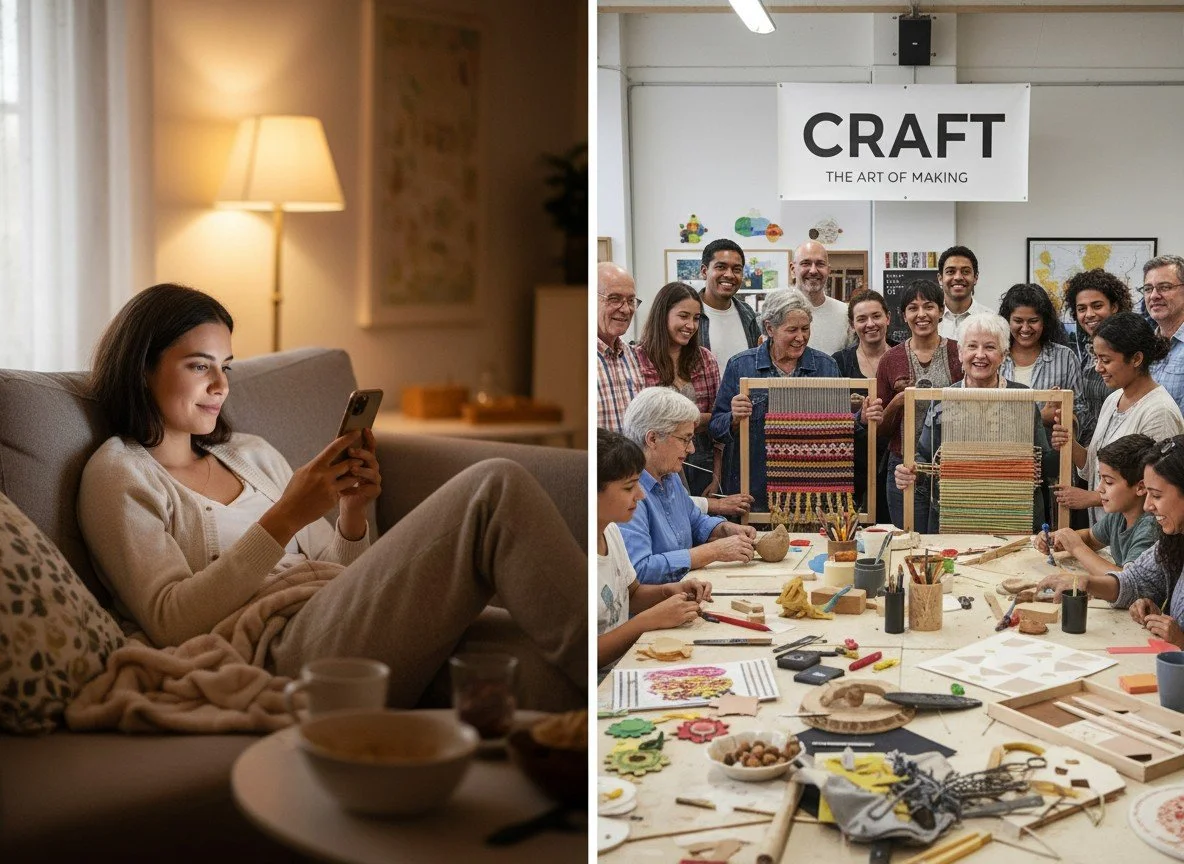
Museums worldwide are competing for people’s attention while facing shrinking funding. At the same time, how people choose to spend their time has shifted — and will continue to. This forces museums to rethink how they demonstrate their value.
People often say they don’t have time for museums. But people make time for what they truly value. The real question is not time — it’s relevance, connection, and return on effort. We live in a world of instant, on-demand information. Algorithms tailor what we see, and the experience is personalised, immediate, and frictionless. Content can educate, entertain, provoke, or comfort — often all at once — and much of it is created by people who have mastered engagement and emotional resonance.
Now compare that to a museum visit. You must decide to go, plan, travel, find parking, pay admission, and navigate an unfamiliar space. Each step introduces friction. Once inside, programmes are largely predetermined. Planned years in advance, they cannot respond to emerging interests or the needs of different visitors. Institutional priorities are not always aligned with visitor priorities.
As a visitor, I rarely encounter content tailored to me. I engage with what the museum has decided I should. In a world of personalised content ecosystems, this creates a glaring disconnect. This is not a failure of museums. It signals that the environment has changed. Digital content is limited to a screen. It is often solitary and rarely creates shared, physical experiences.
Museums can offer what screens cannot: connection. They can meet us where we are and bring us together. This looks less like static exhibitions and more like dynamic platforms. Less like fixed programmes and more like adaptable experience ecosystems. Less like interpretation and more like participation.
Today museums are social infrastructure: places to gather, debate, make, learn, rest, connect, and reflect. Places where you do something, not just look. Where memory, identity, and belonging are actively constructed together. Their competitive advantage is not information. It is authenticity, presence, and shared human experience.
Not just places people should visit — places people need.