I was introduced to making physical exhibition models by Lyn Plummer—an artist who taught me painting (and many other ways of thinking) at art school. Before art school, I was painting full-time and had a fixed idea of the technical skills I needed to acquire. Working with Lyn changed that. She helped me see that painting is spatial and experiential: it is encountered in space, shaped by scale, proportion, distance, and the relationships between bodies, surfaces, and movement. That early shift stayed with me.
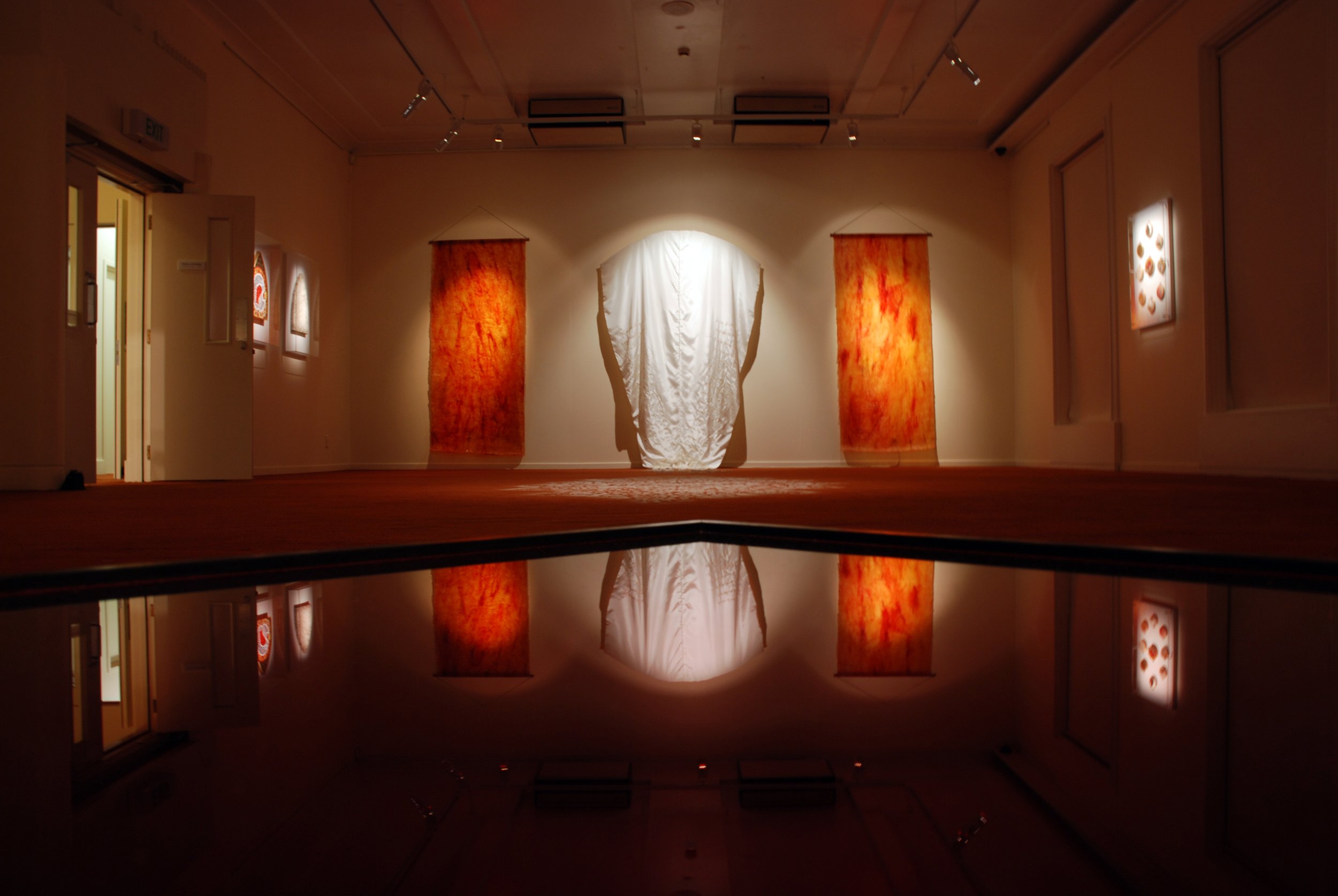
Years later, I worked with Lyn again in my capacity as Manager/Curator at the Ashburton Art Gallery on her touring exhibition ‘Modulations: Cantata Reconfigured.’ While the exhibition had a core set of works that travelled, each iteration was reconfigured with new works responding to the architecture, spatial conditions, and context of each venue. Lyn created a physical model of every gallery space to map installations, sightlines, and circulation. Watching her use these models as thinking tools—testing scale, proximity, and movement—was transformative. Space became something you could hold, explore, and experience before anyone set foot in the gallery.
I had seen exhibition models before and was fascinated by them, but watching Lyn actively use them as working tools made the experience tangible. The models enabled me to understand how an exhibition would be encountered, not just seen. This insight informed my MFA practice, particularly as I established artist-run spaces where the interrogation of space as a medium, and how people experience it, became central.
I kept Lyn’s models for years, using them repeatedly in teaching as examples of spatial thinking in action. Over time they became fragile—barely holding together—but that fragility felt fitting. They were never precious; they were tools shaped by use and by the ideas they helped develop. I return to this approach as I explore the architecture of John McCulloch, who used drawing and model-making as core tools.
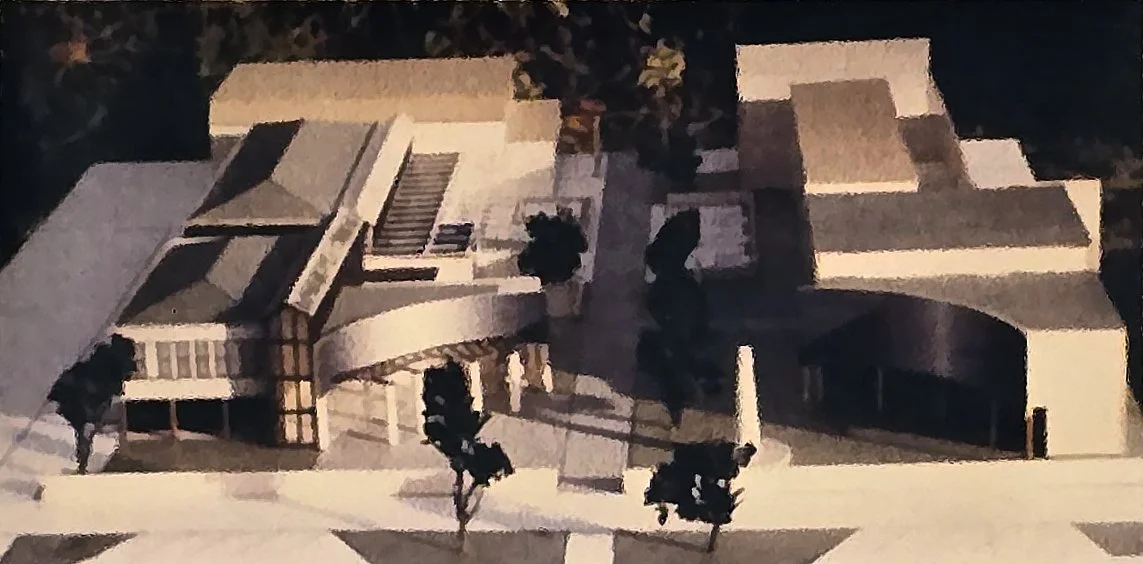
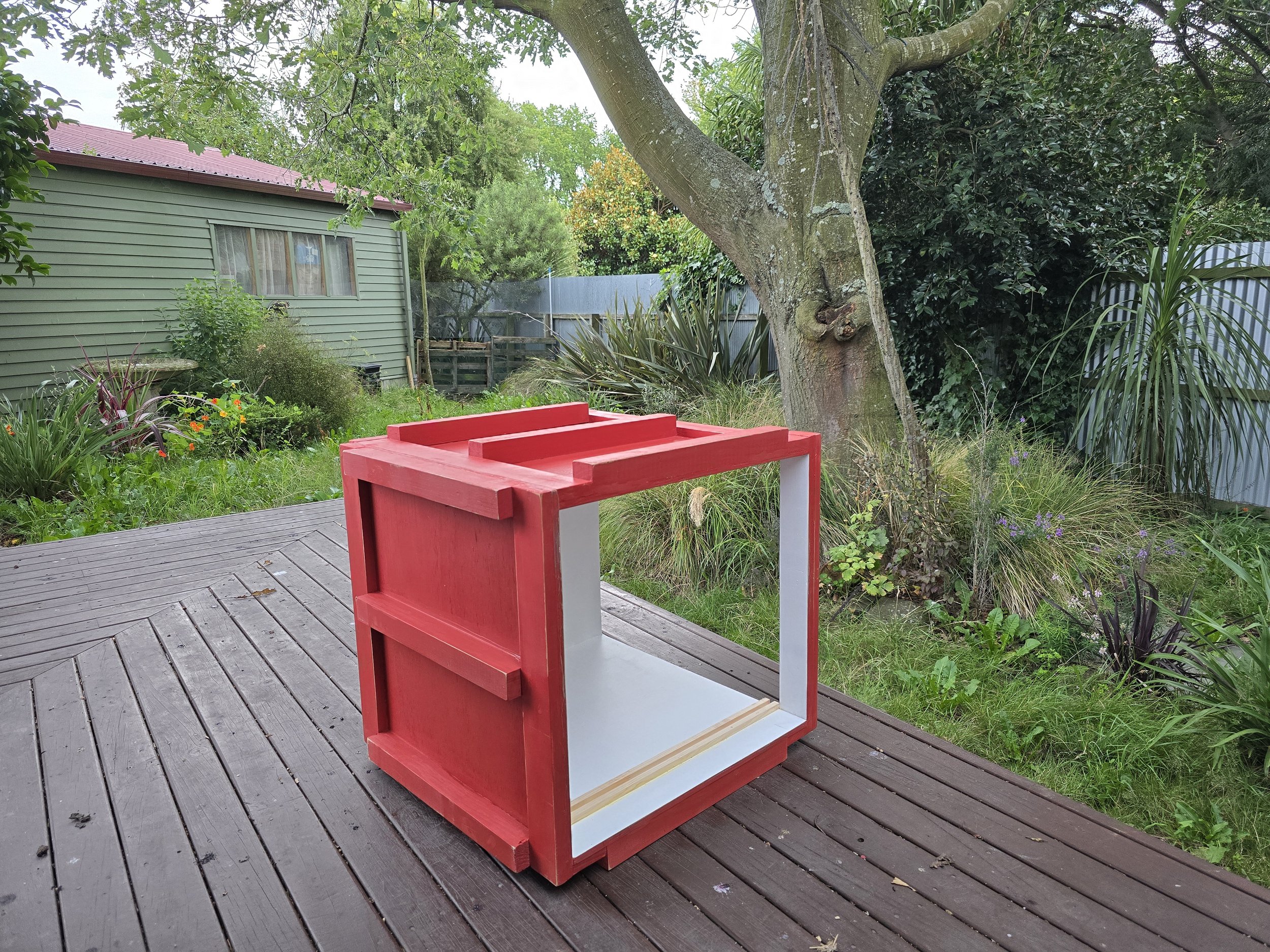
As I prototype a to-scale model of exhibition furniture for the project, I’m reminded how drawings, models, and prototypes allow ideas to be tested and experienced. People who worked with John recall how he drew during meetings, capturing points raised through sketches as much as notes. Only a few of his models survive, but like exhibition models made from non-permanent materials, they capture a moment when an idea became physical, tangible, and thinkable. Their value lies not in permanence, but in the possibilities they opened for experiencing space.
What could we discover if every idea was first made, held, and experienced?
Images: 1. Lyn Plummer, Modulations: Cantata Reconfigured, Ashburton Art Gallery, photography by Rodney Browne
2. John McCulloch, Model for Southland Polytechnic (now SIT) 1998
3. My work-in-progress prototype for exhibition furniture